
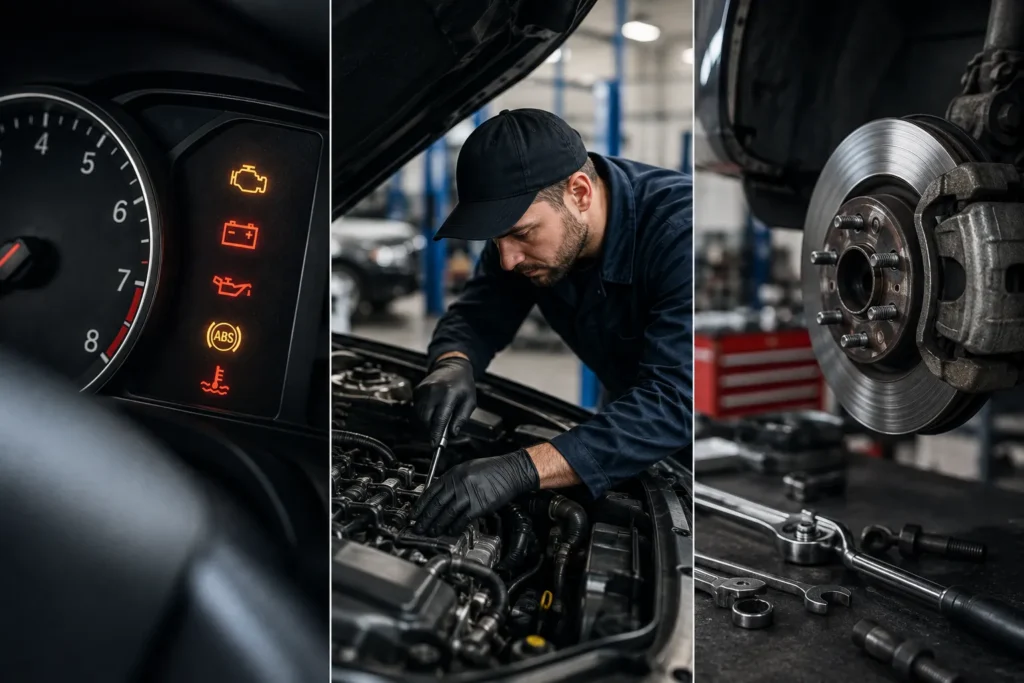
Automotive Advice You Can Trust
Your vehicle often gives you warning signs before a serious mechanical problem develops. Strange noises, dashboard lights, unusual smells, and changes in performance can all indicate that something needs attention.
Ignoring these symptoms may lead to more expensive repairs, reduced fuel efficiency, or unsafe driving conditions. For drivers in Delta and throughout the Lower Mainland, recognizing problems early can help keep your vehicle reliable and prevent unexpected breakdowns.
Here are 10 common warning signs that your vehicle may need professional attention.
1. A Dashboard Warning Light Stays On
Modern vehicles use dashboard warning lights to alert drivers when the onboard computer detects a problem. Some lights are simple reminders, while others indicate issues that should be inspected promptly.
Common warning lights include:
- Check engine light
- Oil pressure warning
- Battery or charging system warning
- Brake system warning
- Coolant temperature warning
- Anti-lock braking system warning
A flashing check engine light is especially important because it may indicate an engine misfire that could damage the catalytic converter. Even when the vehicle appears to drive normally, a warning light should not be ignored.
A professional diagnostic scan can identify a stored trouble code, but the code alone does not always reveal the exact failed component. Proper testing is needed before parts are replaced.
2. You Hear Unusual Noises
New or unfamiliar noises are often among the first signs of mechanical wear.
Different sounds may point to different problems:
- Squealing while braking may indicate worn brake pads.
- Grinding from the wheels may suggest severely worn brakes or a damaged wheel bearing.
- Clicking while turning may indicate a worn CV joint.
- Knocking from the engine may be related to lubrication, ignition, or internal engine problems.
- Rattling underneath the vehicle may come from a loose exhaust component or heat shield.
- Humming that increases with speed may indicate tire or bearing wear.
Some noises may begin quietly and gradually become louder. Scheduling an inspection early can prevent a minor issue from becoming a major repair.
Blue Wrench Auto provides dependable auto repair in Delta for drivers experiencing unusual sounds, performance problems, warning lights, and other vehicle concerns.
3. Your Vehicle Pulls to One Side
A vehicle that pulls left or right while driving may have a tire, steering, suspension, alignment, or brake-related problem.
Possible causes include:
- Uneven tire pressure
- Irregular tire wear
- Wheel alignment problems
- Worn steering or suspension components
- A sticking brake caliper
- Damaged tires
Pulling may become more noticeable at highway speeds or while braking. Because steering and braking problems can affect vehicle control, the cause should be inspected instead of being corrected by constantly adjusting the steering wheel.
4. Braking Feels Different
Your braking system should respond smoothly and consistently. Changes in braking performance should always be taken seriously.
Warning signs include:
- A soft or spongy brake pedal
- A pedal that travels farther than normal
- Grinding or squealing noises
- Steering wheel vibration while braking
- The vehicle pulling during braking
- A burning smell near a wheel
- Increased stopping distance
- A brake warning light
A soft brake pedal may be related to air in the hydraulic system, low brake fluid, a fluid leak, or a failing brake component. Vibration may be caused by uneven brake rotor surfaces or worn suspension parts.
Do not wait for brake performance to become severely reduced before arranging an inspection.
5. You Notice Fluid Under the Vehicle
Not every puddle underneath a parked vehicle indicates a serious problem. Clear water is often normal condensation from the air-conditioning system. Coloured, oily, or strongly scented fluids, however, may indicate a leak.
Common automotive fluids include:
- Engine oil, which is usually brown or black
- Coolant, which may be green, orange, pink, yellow, or blue
- Transmission fluid, which is often red or reddish-brown
- Brake fluid, which is typically clear to amber
- Power steering fluid, which may be red, amber, or brown
- Windshield washer fluid, which is often blue
Fluid colour can vary between vehicles and products, so colour should only be treated as an initial clue. A technician can identify the fluid, locate the source of the leak, and determine whether the vehicle is safe to drive.
6. The Engine Is Overheating
An overheating engine requires immediate attention. Continuing to drive while the temperature is too high can cause serious engine damage.
Possible causes include:
- Low coolant
- A coolant leak
- A malfunctioning thermostat
- A damaged radiator
- A failed cooling fan
- A worn water pump
- A blocked cooling-system passage
- A damaged hose or belt
Signs of overheating may include a rising temperature gauge, a temperature warning light, steam from under the hood, reduced engine performance, or a sweet smell from leaking coolant.
If the engine begins overheating, move to a safe location and shut it off. Never remove a hot radiator cap or coolant reservoir cap because pressurized coolant can cause serious burns.
7. Fuel Economy Has Suddenly Decreased
Fuel consumption can change because of weather, traffic, driving habits, tire pressure, and the use of heating or air conditioning. However, a noticeable and ongoing drop in fuel economy may indicate a mechanical problem.
Possible causes include:
- Underinflated tires
- Worn spark plugs
- A dirty or faulty sensor
- Fuel-system problems
- Brake drag
- Engine misfires
- Exhaust-system restrictions
- Incorrect wheel alignment
- Delayed maintenance
Tracking your fuel use over several fill-ups can help confirm whether the change is consistent. A proper inspection can identify the cause instead of relying on unnecessary fuel additives or replacing parts without testing.
8. The Vehicle Vibrates or Shakes
Vehicle vibration may occur while driving, accelerating, braking, or idling. The timing and location of the vibration can help narrow down the cause.
Common possibilities include:
- Unbalanced wheels
- Damaged or unevenly worn tires
- Brake rotor problems
- Worn engine or transmission mounts
- Steering or suspension wear
- Driveline problems
- Engine misfires
A shaking steering wheel at certain speeds is often associated with the tires or wheels. Vibration while braking may involve the brake system. Shaking while stopped may be related to engine operation or worn mounts.
Because vibrations can affect handling and accelerate wear on other parts, they should not be left unresolved.
9. The Engine Is Difficult to Start
A vehicle that cranks slowly, requires multiple attempts to start, or occasionally fails to start may have a battery, electrical, starter, ignition, or fuel-delivery problem.
Possible causes include:
- A weak battery
- Corroded or loose battery connections
- A failing starter motor
- Charging-system problems
- Worn spark plugs
- A faulty ignition component
- Fuel-pump or fuel-pressure problems
- Sensor or wiring faults
Cold weather can place additional demand on a weak battery, which is especially relevant for Lower Mainland drivers during cooler and damp winter conditions.
Testing the battery and charging system can help determine whether the battery is failing or whether another component is preventing it from charging properly.
10. Your Vehicle Feels Less Responsive
Changes in acceleration, shifting, idling, or overall performance may indicate that the engine or transmission is not operating correctly.
Watch for symptoms such as:
- Hesitation during acceleration
- Rough or unstable idling
- Reduced engine power
- Jerking or surging
- Delayed transmission engagement
- Hard or irregular shifting
- Engine stalling
- Unusual exhaust smoke
These symptoms may be caused by ignition, fuel, air-intake, sensor, exhaust, transmission, or internal mechanical problems. Because many systems can produce similar symptoms, accurate diagnosis is important before beginning repairs.
Why Early Vehicle Repairs Matter
Small vehicle problems rarely correct themselves. A minor leak can lead to low fluid levels. A worn brake pad can damage the rotor. A weak battery can place additional strain on the charging system. A cooling-system problem can eventually cause severe engine damage.
Early diagnosis can provide several benefits:
- Lower repair costs
- Improved vehicle safety
- Better fuel efficiency
- Reduced risk of breakdowns
- Longer component life
- More reliable daily transportation
Drivers throughout Delta and the Lower Mainland depend on their vehicles for commuting, family responsibilities, deliveries, appointments, and business operations. Addressing warning signs promptly helps reduce disruption and keeps the vehicle operating safely.
Schedule an Inspection with Blue Wrench Auto
When your vehicle begins making unusual noises, displaying warning lights, leaking fluid, or driving differently, professional testing can help identify the real cause.
Blue Wrench Auto provides professional auto repair for all makes and models in Delta, BC. Our team focuses on accurate diagnostics, practical repair recommendations, quality workmanship, and dependable vehicle maintenance.
To arrange an inspection or discuss a concern with our team, book your vehicle service with Blue Wrench Auto.
Recognizing warning signs early can help prevent larger problems and keep your vehicle safe, efficient, and dependable on roads throughout Delta and the Lower Mainland.