
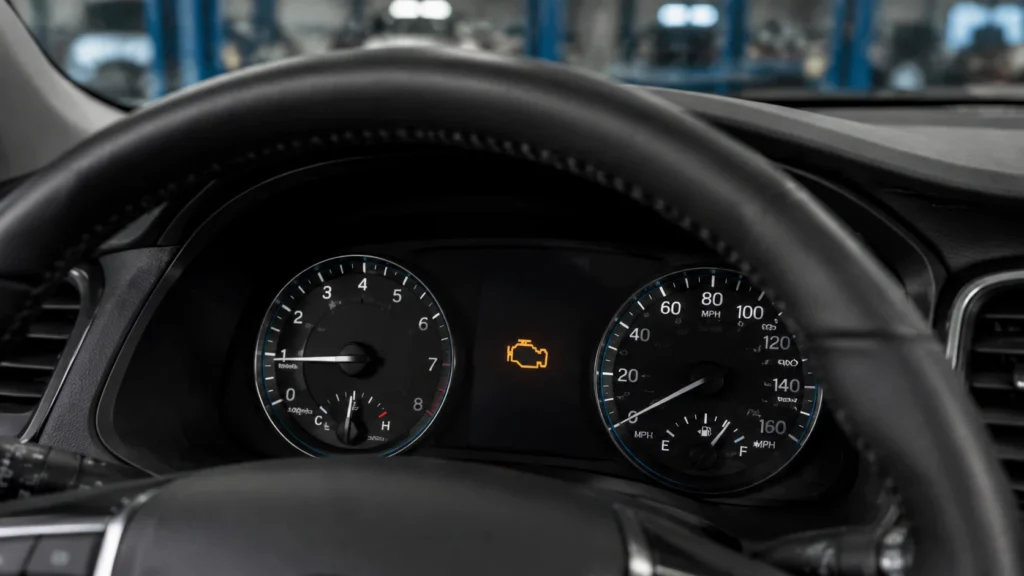
The check engine light means your vehicle’s computer has detected a problem that could affect engine performance, fuel efficiency, emissions, or another powertrain-related system. It doesn’t identify one specific repair, and it doesn’t always mean the engine is about to fail. The urgency depends on whether the light is steady or flashing and whether the vehicle is showing symptoms such as shaking, reduced power, unusual noises, smoke, or overheating.
What Your Vehicle Is Trying to Tell You
When the engine is running, onboard computers continuously monitor sensors and systems that control combustion, fuel delivery, ignition, airflow, and emissions. If a reading falls outside the expected range, the computer records a diagnostic trouble code and may switch on the check engine light. The code gives a technician a starting point, but it doesn’t automatically identify the failed part. Proper vehicle diagnostics in Delta involve interpreting the code, reviewing live data, inspecting related components, and testing the system before recommending a repair.
A Steady Light and a Flashing Light Mean Different Things
A steady check engine light usually means the computer has detected a problem that should be inspected soon. If the vehicle feels normal, there are no red warning lights, and the engine isn’t overheating, you can usually drive it carefully for a short distance to arrange an appointment. A flashing check engine light is much more urgent. It often indicates an active misfire that can send unburned fuel into the exhaust and quickly overheat the catalytic converter. Reduce your speed, avoid hard acceleration, and pull over somewhere safe. If the light continues flashing or the engine is shaking, arrange for the vehicle to be towed rather than continuing to drive.
The Light Normally Appears Briefly When You Start the Vehicle
It’s normal for the check engine light to illuminate for a few seconds when you turn on the ignition. This is part of the vehicle’s system check. The light should turn off shortly after the engine starts. If it stays on, begins flashing, or doesn’t illuminate at all during startup, the system should be inspected. A warning light that never comes on during the startup check may indicate a problem with the instrument cluster, bulb, or warning-light circuit.
The Most Common Reasons It Turns On
A loose or damaged fuel cap is one possible cause because it can allow fuel vapours to escape from the sealed evaporative-emissions system. Other common causes include worn spark plugs, failing ignition coils, air or fuel measurement problems, oxygen-sensor faults, vacuum leaks, fuel-delivery issues, exhaust leaks, or reduced catalytic-converter efficiency. The same warning light can represent hundreds of different trouble codes, so the cause can’t be confirmed by the light alone. Even two vehicles with the same code may need different repairs.
Why a Trouble Code Isn’t a Parts List
A code identifies the system or operating condition where the computer found a problem. It doesn’t necessarily prove that a particular component has failed. For example, a cylinder-one misfire code confirms that combustion is inconsistent in that cylinder, but the cause could be a spark plug, ignition coil, fuel injector, wiring fault, vacuum leak, or mechanical compression problem. Replacing the part named in an online code description can waste money and leave the original problem unresolved. Testing is what separates an accurate diagnosis from a guess.
Can a Loose Fuel Cap Really Trigger the Light?
Yes, a loose, damaged, or poorly sealing fuel cap can trigger an evaporative-emissions code. If the light appeared shortly after refuelling, safely check that the cap is properly installed and tightened. Some vehicles may require several normal driving cycles before the light turns off, even after the cap has been secured. If the light remains on, don’t assume the cap is the only possible cause. The system may have a leaking hose, faulty valve, damaged seal, or another issue that requires testing. Vehicles with capless fuel systems can also develop leaks around the filler-neck sealing mechanism.
When You Should Stop Driving
Pull over as soon as it’s safe if the check engine light is flashing or the vehicle is shaking, stalling, losing significant power, producing smoke, overheating, or making a new mechanical noise. You should also stop if a red oil-pressure or temperature warning appears with the check engine light. Continuing to drive under these conditions could turn a manageable fault into major engine or catalytic-converter damage. If the light is steady and the vehicle feels completely normal, drive gently and arrange an inspection promptly rather than waiting for symptoms to appear.
Why the Vehicle May Still Seem to Run Normally
Some faults don’t create immediate or noticeable driving symptoms. A small emissions leak or a sensor beginning to drift out of range may turn on the light while the engine still starts and runs normally. In other cases, the computer compensates for a faulty reading by using estimated values. This protective strategy may keep the vehicle operating, but it can also increase fuel consumption, raise emissions, reduce performance, or place extra stress on other components. A vehicle that feels normal isn’t necessarily problem-free.
Why Clearing the Light Doesn’t Fix the Problem
Disconnecting the battery or using a code reader to erase the warning light only clears stored information. It doesn’t repair the condition that caused the code. The light will usually return once the computer detects the fault again. Clearing codes can also erase freeze-frame information showing engine speed, temperature, load, and other conditions present when the problem occurred. That information can be valuable during diagnosis. It may also reset emissions-readiness monitors, which then need to complete their tests again.
Check Engine Light or Maintenance Reminder?
The check engine light and the maintenance reminder aren’t the same thing. A maintenance reminder is normally based on time, mileage, or an oil-life calculation and indicates that scheduled service is due. The check engine light is triggered because the computer detected an operating fault. Completing an oil change won’t normally turn off a check engine light unless the warning was caused by a separate issue that was diagnosed and corrected at the same time.
Can Cold or Wet Weather Cause the Light?
Weather alone shouldn’t cause a properly operating vehicle to switch on the check engine light, but Lower Mainland conditions can expose an existing weakness. Cold starts may reveal a marginal ignition coil, worn spark plug, weak electrical connection, or temperature-related sensor problem. Moisture can aggravate damaged wiring or ignition components. If the light disappears once the weather changes, the stored code should still be checked because intermittent faults often return.
What a Proper Diagnostic Inspection Includes
A technician begins by scanning the vehicle for stored, pending, and history codes. The next steps may include reviewing freeze-frame information, monitoring live sensor data, inspecting wiring and connectors, checking for vacuum or exhaust leaks, measuring fuel pressure, testing ignition components, or verifying mechanical engine condition. The exact process depends on the code and the vehicle’s symptoms. The goal is to confirm why the computer recorded the fault before replacing anything.
How to Reduce the Chance of Future Warning Lights
No maintenance routine can prevent every electronic or mechanical fault, but following the manufacturer’s service schedule helps. Replace spark plugs at the specified interval, use the correct fluids and fuel, keep the fuel cap or capless filler seal clean, and address rough running or hard starting before it becomes severe. If a warning light appears, avoid repeatedly clearing it and hoping it won’t return. Early diagnosis is often less expensive than repairing damage caused by driving with an unresolved misfire, fuel-control problem, or overheating catalytic converter.
Get a Clear Answer Before Replacing Parts
The check engine light is a request for diagnosis, not a final verdict on your engine. If the light is on, Blue Wrench Auto can perform professional automotive diagnostics to identify what triggered it and determine what actually needs attention. Drivers in Delta and across the Lower Mainland can book an appointment with Blue Wrench Auto for accurate testing and a practical repair recommendation.