
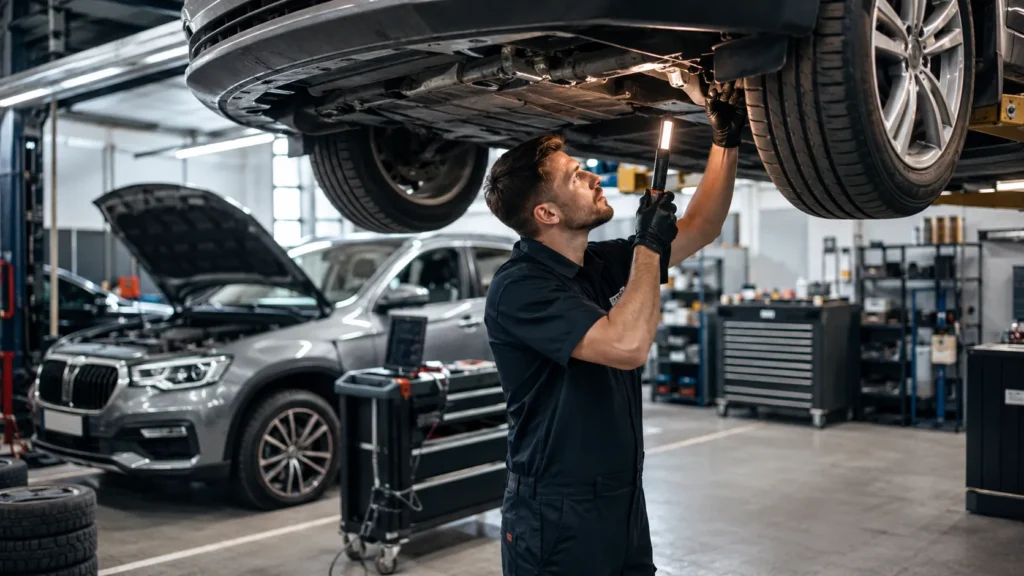
A full-service auto repair shop does much more than fix vehicles after something breaks. It provides routine maintenance, inspections, diagnostics, mechanical repairs, electrical service, tire and brake care, and preventative maintenance designed to help keep a vehicle safe, reliable, and operating properly.
For drivers in Delta and throughout the Lower Mainland, using one full-service shop can make vehicle ownership easier because many different automotive needs can be handled in one place. Instead of visiting different shops for warning lights, brakes, tires, electrical problems, maintenance, and mechanical repairs, a full-service facility can evaluate how the vehicle’s systems work together and recommend service based on its overall condition.
Routine Maintenance Helps Prevent Bigger Problems
Routine maintenance is one of the most important services provided by a full-service auto repair shop. Many vehicle problems develop gradually as fluids deteriorate, filters become restricted, rubber components age, brakes wear, and mechanical parts accumulate kilometres.
Preventative maintenance may include engine oil and filter changes, fluid inspections, air and cabin filter replacement, brake inspections, tire checks, battery testing, belt and hose inspections, cooling-system checks, and steering and suspension inspections.
Maintenance intervals vary depending on the vehicle, manufacturer recommendations, mileage, age, driving conditions, and how the vehicle is used. Frequent short trips, stop-and-go Lower Mainland traffic, towing, commercial use, and high annual mileage can all affect how quickly certain components require attention.
Professional Diagnostics Find the Cause of Vehicle Problems
Modern vehicles rely on computers, sensors, wiring, control modules, and mechanical systems that constantly communicate with one another. When a warning light appears or a vehicle begins running differently, identifying the actual cause is often more complicated than simply replacing a part.
Professional diagnostics may include reading diagnostic trouble codes, examining live sensor data, testing electrical circuits, checking fuel or ignition operation, inspecting mechanical components, performing pressure or vacuum tests, and road testing the vehicle.
A diagnostic trouble code should usually be treated as a starting point rather than a complete diagnosis. The same code can sometimes be triggered by several different problems.
Working with a shop that provides professional auto repair allows the problem to be properly diagnosed before repairs are recommended, helping reduce unnecessary parts replacement and allowing technicians to address the actual cause.
Brake Service Protects Stopping Performance
Your vehicle’s braking system contains multiple components that work together every time you slow down or stop. Brake pads are only one part of the system.
A complete brake inspection may include the pads, rotors, calipers, brake fluid, hoses, lines, parking brake components, and ABS-related systems.
Warning signs that your brakes should be inspected include squeaking, grinding, vibration, increased stopping distance, pulling while braking, a soft or spongy pedal, or a brake warning light.
Brake wear can also occur unevenly. Inspecting the complete system helps determine whether the issue involves normal pad wear or another component that may be affecting braking performance.
Tire Service Supports Safety, Handling, and Tire Life
Tires affect traction, braking, steering response, ride quality, and overall vehicle safety. A full-service auto repair shop can inspect tires and help identify problems before they lead to poor handling or premature replacement.
Tire services may include seasonal tire changes, rotations, pressure checks, tread inspections, puncture repairs, wheel balancing, tire installation, and tire-wear diagnosis.
Uneven tire wear can sometimes indicate more than a tire problem. Incorrect pressure, worn suspension components, steering issues, or alignment problems may all contribute to abnormal tread wear.
Identifying the reason for unusual tire wear can improve handling while helping extend the life of the tires.
Engine Problems Should Be Diagnosed Before Parts Are Replaced
Engine problems can range from relatively simple maintenance concerns to fuel, ignition, cooling, lubrication, sensor, or internal mechanical problems.
Drivers may notice rough idling, hesitation, loss of power, difficult starting, excessive exhaust smoke, poor fuel economy, unusual noises, fluid leaks, overheating, or a check-engine light.
Several different problems can produce similar symptoms. For example, poor acceleration could be related to ignition, fuel delivery, airflow, sensor information, or a mechanical issue.
Professional testing helps determine why the symptom is occurring before a repair is recommended.
Battery and Electrical Testing Goes Beyond Replacing the Battery
Modern vehicles depend heavily on their electrical systems. The battery is important, but it works alongside the alternator, starter, wiring, fuses, relays, modules, sensors, and charging system.
If a vehicle will not start, replacing the battery without testing may not solve the problem.
A full-service shop can test the battery, charging system, alternator, starter, electrical connections, wiring, fuses, and other components to determine why the vehicle is experiencing an electrical or starting problem.
Testing is especially important when problems occur intermittently, such as a vehicle that starts normally one day but struggles the next.
Steering and Suspension Service Helps Maintain Vehicle Control
The suspension and steering systems help keep your vehicle stable, predictable, and comfortable while driving.
Depending on the vehicle, these systems may include shocks, struts, control arms, ball joints, tie rods, bushings, springs, steering components, and wheel bearings.
Possible warning signs include clunking over bumps, excessive bouncing, loose steering, pulling, vibration, uneven tire wear, unusual steering effort, or the vehicle sitting lower on one side.
Potholes, road conditions, mileage, age, and normal wear can gradually affect these components. A suspension problem that begins as a small noise may eventually affect tire wear, handling, steering response, or vehicle stability.
Cooling-System Maintenance Helps Prevent Overheating
The cooling system regulates engine temperature and prevents excessive heat from damaging engine components.
Important parts include the radiator, coolant, water pump, thermostat, cooling fans, hoses, and expansion tank.
Warning signs of cooling-system trouble may include a rising temperature gauge, low coolant, visible leaks, steam, unusual smells, or an engine temperature warning light.
Continuing to drive a severely overheated engine can lead to expensive damage. A proper inspection can identify whether the problem involves a leak, circulation issue, cooling fan, thermostat, radiator, or another component.
Vehicle Inspections Help You Understand Overall Condition
A vehicle inspection is useful even when your vehicle appears to be operating normally. Inspections can identify developing wear, maintenance needs, and safety concerns before they become more serious.
Vehicle inspections may be useful before a road trip, before seasonal driving, when maintenance history is unknown, when buying or selling a vehicle, after long-term storage, or simply as part of routine preventative maintenance.
A thorough inspection can evaluate areas such as brakes, tires, steering, suspension, fluids, leaks, belts, hoses, lights, battery condition, and other important systems.
The goal is not simply to find problems. It is to give the vehicle owner a clearer understanding of what requires immediate attention, what should be maintained soon, and what can continue to be monitored.
Fluid Leaks Should Be Identified at Their Source
Vehicles rely on several different fluids, including engine oil, coolant, brake fluid, transmission fluid, power steering fluid, and drivetrain lubricants.
Finding fluid underneath the vehicle does not always show where the leak started because fluids can travel along covers, hoses, frames, and other components before reaching the ground.
A professional inspection helps determine the type of fluid, where it is coming from, and whether the leak requires immediate attention.
Finding leaks early can prevent low fluid levels from causing additional wear or damage.
Manufacturer Maintenance Schedules Help Guide Long-Term Care
Vehicle manufacturers provide maintenance schedules based on mileage, time, vehicle design, and expected operating conditions.
Scheduled maintenance may include inspection or replacement of oils, fluids, filters, spark plugs, belts, and other service items.
A full-service repair shop can review the vehicle’s maintenance history and help determine which services are currently due instead of automatically replacing everything at once.
Keeping accurate service records also makes it easier to know what has already been completed and what maintenance may be approaching.
Using One Full-Service Shop Creates Better Maintenance History
One advantage of regularly using the same repair shop is continuity.
Over time, technicians become familiar with previous repairs, inspections, maintenance, recurring concerns, and the overall condition of the vehicle.
This history can make future service easier to plan because recommendations can be based on what has already been inspected or replaced.
For families and businesses with multiple vehicles, keeping service organized through one shop can also simplify maintenance scheduling and record keeping.
A Good Repair Shop Should Explain What Your Vehicle Needs
Professional auto repair should include clear communication.
Vehicle owners should understand what problem was found, why a repair is recommended, which items require immediate attention, which items can be monitored, and what maintenance may be approaching.
A good repair shop should be able to explain mechanical concerns in straightforward language without expecting the customer to understand every technical detail.
This allows the vehicle owner to make informed decisions and plan repairs based on safety, reliability, maintenance priorities, and budget.
When Should You Visit a Full-Service Auto Repair Shop?
You do not need to wait until your vehicle breaks down before scheduling service.
An inspection may be appropriate if you notice dashboard warning lights, fluid leaks, new noises, unusual smells, changes in braking, steering problems, starting difficulties, vibration, overheating, poor engine performance, or abnormal tire wear.
Routine maintenance should also continue even when the vehicle appears to be operating normally.
Many automotive problems develop gradually, and identifying them early can often make repairs easier to plan and help reduce the risk of an unexpected breakdown.
Complete Auto Repair in Delta, BC
A full-service auto repair shop provides much more than individual repairs. It helps vehicle owners maintain, inspect, diagnose, and repair the systems that keep their vehicles safe and dependable.
From routine maintenance and vehicle inspections to brakes, tires, diagnostics, electrical systems, suspension, cooling-system concerns, and engine repairs, having one experienced team available for multiple automotive needs can simplify long-term vehicle care.
For drivers in Delta and throughout the Lower Mainland, Blue Wrench Auto provides comprehensive local mechanic services for a wide range of automotive maintenance, diagnostic, and repair needs.
If your vehicle is due for maintenance, showing a warning sign, or simply needs a professional inspection, you can book an appointment with Blue Wrench Auto to have it properly assessed.