
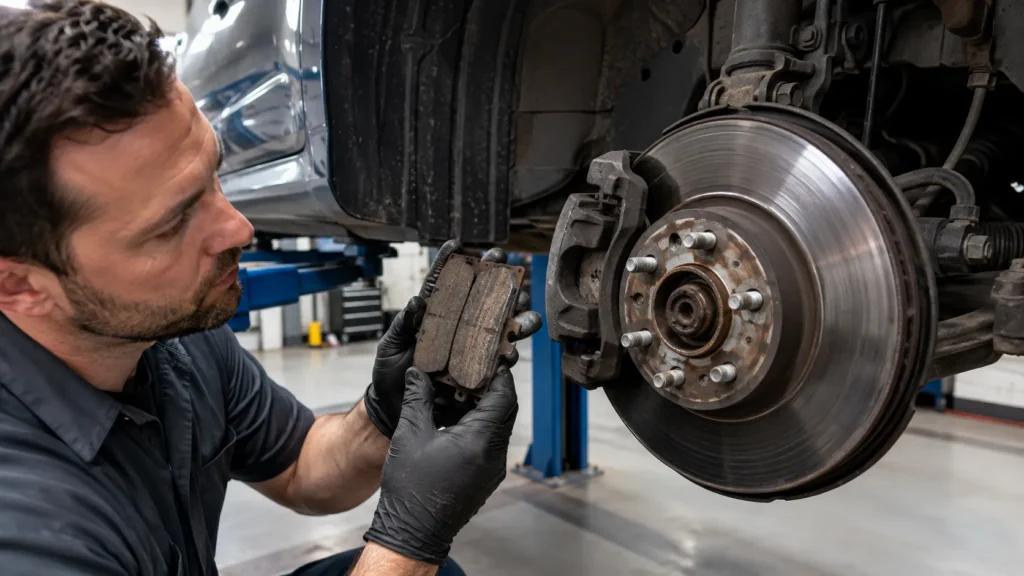
Brake pads wear down gradually, so it isn’t always obvious when they’re reaching the end of their service life. The most common warning signs include squealing, grinding, longer stopping distances, vibration while braking, dashboard warnings, visibly thin pads, and changes in how the vehicle feels when stopping. Catching these signs early can help protect braking performance and prevent unnecessary damage to other brake components.
1. You Hear Squealing or Screeching When Braking
A persistent high-pitched squeal when you press the brake pedal is one of the most common signs that your brake pads are wearing thin. Many brake pads include a small metal wear indicator that begins contacting the rotor once the friction material reaches a certain thickness. Occasional brake noise after rain, washing the vehicle, or leaving it parked overnight can sometimes come from light surface rust and disappear after a few stops. But if the squealing keeps returning during normal braking, it’s worth having the pads checked. A technician performing brake repair in Delta can measure the remaining pad material and determine whether replacement is needed now or whether there’s still usable life left.
2. You Hear Grinding or Scraping
Grinding is a more serious warning than squealing. It can mean the brake pad friction material has worn away far enough that metal is contacting the brake rotor. Once that happens, the rotor can become scored or damaged very quickly. What could have been a straightforward brake pad replacement may turn into a more expensive repair involving additional brake components. If you hear a harsh grinding or scraping sound while braking, don’t keep driving longer than necessary. Have the brakes inspected promptly.
3. Your Vehicle Takes Longer to Stop
Brake pad wear doesn’t always create noise. Sometimes the first thing you’ll notice is that the vehicle doesn’t seem to stop as quickly as it used to. You may find yourself pressing the brake pedal harder, starting to brake earlier, or needing more distance to slow down in traffic. Because brake pad wear happens gradually, drivers can sometimes adapt to the change without realizing braking performance has deteriorated. If stopping distance feels noticeably longer, particularly during heavier braking or Lower Mainland stop-and-go traffic, the brakes should be inspected.
4. You Feel Vibration When Braking
A vibration or pulsation through the brake pedal or steering wheel can indicate that the braking surfaces aren’t making smooth, even contact. Worn brake pads may contribute to uneven rotor wear, while excessive heat can also affect the rotor surface. However, vibration doesn’t automatically mean the brake pads alone need replacing. It does mean the brake system should be checked. A proper inspection can determine whether the issue involves worn pads, rotor condition, uneven wear, or another braking component.
5. A Brake Warning Appears on the Dashboard
Some newer vehicles use electronic brake pad wear sensors. When the pads reach a predetermined thickness, the vehicle may display a warning message or brake-related symbol on the dashboard. Not every vehicle has this feature, and a general brake warning light can indicate several different issues. That’s why a warning light shouldn’t automatically be assumed to mean worn brake pads. If a brake-related warning appears, check the owner’s manual for the meaning of the symbol and arrange an inspection if the cause isn’t obvious.
6. The Brake Pads Look Very Thin
Depending on the wheel design, you may be able to see part of the brake pad through the wheel openings. The friction material sits against the brake rotor and becomes thinner as the vehicle is driven. As a general guideline, pads approaching roughly 3 millimetres of remaining friction material are often nearing replacement, although the correct decision should be based on the vehicle manufacturer’s specifications and an actual measurement. A visual check can be useful, but it doesn’t tell the whole story. Inner and outer brake pads can wear at different rates, so the pad you can see may not be the most worn one.
7. The Vehicle Pulls or the Brake Pedal Feels Different
If your vehicle begins pulling to one side while braking, uneven brake pad wear may be part of the problem. One side of the vehicle may be producing more braking force than the other because of uneven pad thickness or because another brake component isn’t allowing the pads to operate correctly. Changes in brake pedal feel also deserve attention. If the pedal suddenly requires more pressure than usual or braking feels noticeably different, don’t assume it’s normal wear. Several brake problems can create similar symptoms, so proper diagnosis is important.
How Long Do Brake Pads Usually Last?
There isn’t one mileage interval that applies to every vehicle. Brake pad life depends on the vehicle, pad material, driving habits, road conditions, vehicle weight, and how often the brakes are used. A vehicle spending most of its time on highways may get significantly more life from its pads than one driven every day through busy Delta and Lower Mainland traffic. Frequent stop-and-go driving, heavy loads, repeated hard braking, and steep downhill driving can all accelerate wear. The most reliable approach is to have brake pad thickness checked during routine service rather than relying only on mileage.
Can You Keep Driving With Worn Brake Pads?
It depends on how worn the pads are and what symptoms you’re experiencing. Brake pads that are simply approaching their replacement limit may still provide normal braking while you arrange service. But grinding, significantly reduced braking performance, strong pulling, or a major change in pedal feel shouldn’t be ignored. Driving with severely worn pads can damage the rotors and may reduce your ability to stop safely.
Why Replacing Brake Pads on Time Matters
Brake pads are designed to wear out. Replacing them is a normal part of vehicle maintenance. The goal is to replace them before the friction material is completely exhausted. Once the metal backing plate begins contacting the rotor, damage can occur quickly. Timely replacement helps maintain predictable braking performance and can prevent a relatively simple brake pad service from becoming a larger repair.
How to Help Your Brake Pads Last Longer
Driving smoothly can make a noticeable difference in brake pad life. Looking farther ahead in traffic gives you more time to slow gradually instead of braking hard at the last second. Avoid resting your foot on the brake pedal while driving, and reduce speed before long downhill sections rather than relying on constant heavy braking. Regular brake inspections also help identify uneven pad wear before it becomes a larger issue.
Don’t Wait for Grinding to Tell You Something Is Wrong
Brake pads rarely reach the end of their service life without giving some type of warning first. Persistent squealing, increased stopping distance, vibration, dashboard warnings, thin pads, grinding, or changes in braking feel are all reasons to have the system checked. If you’re noticing any of these symptoms, a professional brake inspection can determine how much pad material remains and whether replacement is actually necessary.
Blue Wrench Auto serves drivers in Delta and throughout the Lower Mainland with brake inspections and repair recommendations based on the actual condition of the vehicle. If you’re unsure about your brake pads or have noticed one of these warning signs, you can book an appointment with Blue Wrench Auto to have them inspected.