
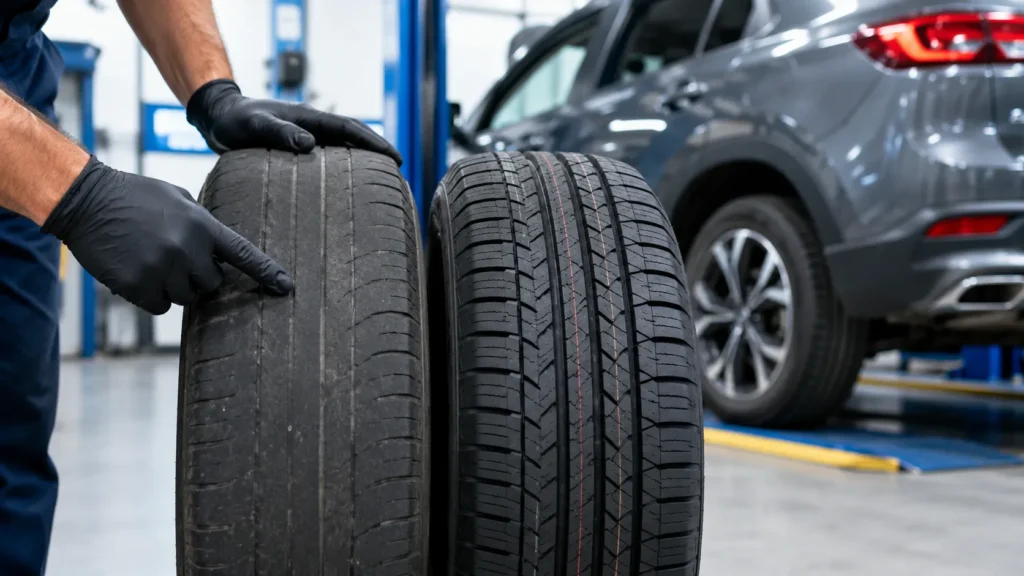
Your tires don’t need to be completely bald before they need replacing. Worn tread, cracking, uneven wear, recurring pressure loss, vibration, visible damage, and age can all indicate that a tire is reaching the end of its safe service life. Because tires are your vehicle’s only contact with the road, recognizing these warning signs early can make a noticeable difference in braking, steering, and traction, especially during the wet driving conditions common around Delta and the Lower Mainland.
Check How Much Tread Is Left
Tread depth is one of the easiest ways to judge whether a tire is approaching replacement. The grooves in the tread are designed to move water away from the tire so the rubber can maintain contact with the road. As those grooves become shallower, the tire becomes less effective at maintaining traction on wet pavement.
Most passenger tires begin with substantially more tread than the minimum amount needed for basic operation. By the time tread reaches approximately 2/32 of an inch, the tire is considered worn out and should be replaced. But waiting until the absolute minimum isn’t always the best approach. Wet-weather performance can start declining before a tire reaches that point.
If you’re unsure how much usable tread remains, a tire service in Delta can measure the tread accurately and check whether all four tires are wearing normally.
Look at the Tire Wear Indicators
Modern tires have small raised bars built into the main tread grooves. These are commonly called tread wear indicators or wear bars.
As the tire wears down, the tread surface gradually gets closer to these bars. When the surrounding tread becomes level with a wear indicator, the tire has reached the end of its usable tread life and should be replaced.
Checking several areas across the tire is important. A tire may still have reasonable tread in the centre while being severely worn along one shoulder, or the opposite can happen.
Watch for Uneven Tread Wear
A tire doesn’t always wear evenly from one side to the other. If one edge is significantly more worn than the rest of the tread, the tire may need replacement even though another section still looks good.
Uneven wear can develop from incorrect tire pressure, alignment problems, worn suspension components, or tires that haven’t been rotated regularly. Once a section of tread has worn excessively, correcting the cause won’t restore the missing rubber.
Look across the entire width of each tire rather than checking only the easiest part to see. And remember to inspect both the front and rear tires because they can wear at different rates.
Cracks in the Sidewall Shouldn’t Be Ignored
Small surface marks aren’t automatically a reason to replace a tire, but deeper cracking deserves attention.
Rubber changes as it ages and is exposed to sunlight, temperature changes, road contaminants, and normal driving conditions. Over time, visible cracks can develop around the sidewall or between tread blocks.
If cracks appear deep, widespread, or severe enough that the rubber looks brittle or separated, have the tire inspected. Sidewall deterioration can weaken the structure of a tire even when there appears to be plenty of tread remaining.
Bulges or Bubbles Mean the Tire Needs Immediate Attention
A bulge or bubble in the sidewall is very different from normal cosmetic wear. It can indicate that the tire’s internal structure has been damaged and air pressure is pushing against a weakened section of the casing.
This can happen after hitting a pothole, curb, road debris, or another sharp impact.
A tire with a visible bulge shouldn’t be treated as something to monitor for another few months. It needs professional attention because structural tire damage can increase the risk of sudden failure.
Cuts, Punctures, and Other Damage May Make Replacement Necessary
Not every puncture means a tire needs replacing. Some tread-area punctures can be safely repaired depending on their size and location.
Damage near the shoulder or sidewall is another matter. Repairs in these areas may not be considered safe because those sections flex significantly as the tire rotates.
Large cuts, exposed internal cords, torn rubber, or repeated punctures are also reasons to have the tire evaluated rather than continuing to drive on it based only on appearance.
Pay Attention to Tires That Keep Losing Pressure
Tire pressure naturally changes with temperature, which is especially noticeable as seasons change in British Columbia. But a tire that repeatedly loses pressure deserves closer inspection.
A slow leak can come from a puncture, valve problem, wheel sealing issue, or tire damage. If you’re constantly adding air to the same tire, don’t assume topping it up is solving the problem.
Finding the source of the pressure loss helps determine whether the tire can be repaired safely or should be replaced.
New Vibration Can Be a Warning Sign
Vehicle vibration can have several possible causes, but damaged or irregularly worn tires are among them.
A tire may develop uneven tread, internal damage, or a deformation that isn’t obvious while the vehicle is parked. You may instead notice it as vibration through the steering wheel, seat, or floor while driving.
If a vibration appears suddenly, becomes stronger with speed, or follows a pothole or curb impact, having the tires checked can help identify whether one has been damaged.
Tire Age Matters Even When the Tread Looks Good
Low-mileage tires can still become unsuitable for continued use because rubber ages whether the vehicle is driven frequently or not.
Every tire has a manufacturing date molded into its sidewall as part of its DOT identification information. The final four digits of the date code identify the week and year the tire was manufactured. For example, “3024” indicates the 30th week of 2024.
Age alone doesn’t tell the complete story. Storage conditions, sunlight exposure, climate, tire condition, vehicle use, and manufacturer recommendations all matter. Older tires should be inspected more carefully rather than judged only by tread depth.
Wet Roads Often Reveal Worn Tires First
Drivers sometimes notice tire wear through changes in vehicle behaviour before they notice it visually.
A vehicle that previously felt stable in rain may begin to feel less secure as tread depth decreases. Longer stopping distances, reduced grip when accelerating, or a greater tendency to lose traction through standing water can all indicate declining wet-weather performance.
This is particularly relevant in Delta and throughout the Lower Mainland, where heavy rain and standing water are common during much of the year.
If your vehicle feels noticeably different on wet pavement, don’t wait for the tread to disappear completely before having the tires checked.
Don’t Assume All Four Tires Need Replacing at the Same Time
Tires can wear at different rates depending on the vehicle, drivetrain, alignment, rotation schedule, driving habits, and tire position.
In some cases, replacing two tires may be appropriate. In others, particularly on certain all-wheel-drive vehicles, differences in tread depth between tires can affect drivetrain operation and manufacturer specifications may need to be followed.
The correct decision should be based on actual tread measurements and the requirements of your specific vehicle rather than automatically replacing one, two, or four tires.
Regular Checks Can Help Your Tires Last Longer
A few simple habits make it easier to spot tire problems before they become severe. Check tire pressure regularly when the tires are cold, inspect the tread and sidewalls for visible damage, and have unusual wear investigated instead of allowing it to continue.
Regular tire rotation can also help promote more even wear where recommended for your vehicle. If a tire begins wearing significantly faster on one edge or one axle, finding the cause early may help protect the remaining tires.
When Should You Have Your Tires Professionally Checked?
Have your tires inspected if the tread is approaching the wear indicators, you see cracking or a bulge, one tire repeatedly loses pressure, the tread is wearing unevenly, or the vehicle has developed an unexplained vibration.
You should also consider an inspection if you simply don’t know the age or condition of the tires currently installed on a used vehicle. A visual check combined with tread measurements and a closer examination can provide a much clearer picture than tread appearance alone.
Blue Wrench Auto provides professional tire inspection for drivers in Delta and across the Lower Mainland. If you’re unsure whether your tires still have safe usable life remaining, book a service with Blue Wrench Auto to have them properly inspected before replacement becomes urgent.