
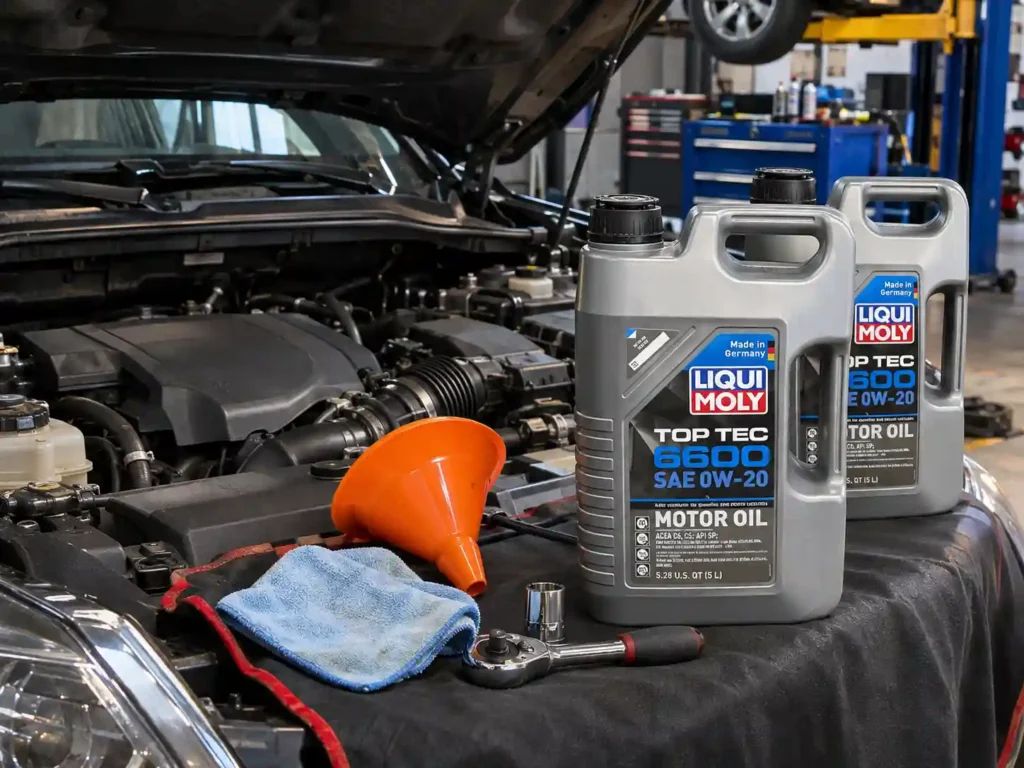
Choosing between synthetic and conventional oil comes down to what your vehicle manufacturer requires, how you drive, the age and design of your engine, and the conditions the vehicle operates in. Synthetic oil generally provides better resistance to heat, cold, oxidation, and breakdown, while conventional oil can still be suitable for some older or less demanding engines when the manufacturer allows it. The right choice isn’t simply the most expensive oil. It’s the oil that meets the correct viscosity and specification for your particular engine.
What Is Conventional Motor Oil?
Conventional motor oil is refined from crude oil and formulated with additives that help clean the engine, reduce wear, control deposits, and protect against corrosion. It has been used successfully in vehicles for decades and can still be appropriate for engines designed to use it. The important part is following the vehicle manufacturer’s required oil viscosity, specification, and service interval rather than choosing oil based only on whether it is labelled conventional or synthetic.
What Is Synthetic Motor Oil?
Synthetic oil uses highly refined or chemically engineered base oils designed to provide more consistent performance across a wider range of operating conditions. It still contains an additive package, but the base oil generally handles temperature extremes and oxidation better than conventional oil. This can be especially useful in modern engines that operate at higher temperatures, use turbochargers, have tighter internal tolerances, or require specific manufacturer-approved oil standards.
Is Synthetic Oil Better Than Conventional Oil?
From a performance standpoint, synthetic oil generally offers advantages. It tends to resist breakdown better at high temperatures, flow more effectively during cold starts, and maintain its protective properties for longer under demanding operating conditions. That doesn’t mean every vehicle automatically requires synthetic oil. If your manufacturer specifies conventional oil and the vehicle operates under normal conditions, conventional oil may still provide proper protection when changed at the correct interval.
Start With What Your Vehicle Manufacturer Requires
Before deciding which oil to use, check the owner’s manual or manufacturer specifications. Modern engines are designed around specific oil viscosities and performance standards. Using the wrong oil can affect lubrication, fuel economy, emissions systems, variable valve timing, turbocharger protection, and overall engine operation. A professional oil change service should use oil that meets the specifications required for your vehicle rather than simply choosing a product based on price or habit.
Why Synthetic Oil Handles Cold Starts Better
Cold starts are one of the hardest moments for an engine because much of the oil has drained back into the oil pan while the vehicle was parked. The oil needs to circulate quickly once the engine starts. Synthetic oils generally remain more fluid at lower temperatures, allowing them to move through the engine more quickly during cold starts. That can be useful during colder Lower Mainland mornings, particularly for vehicles parked outside overnight.
Synthetic Oil Also Handles High Temperatures Better
Engine oil is exposed to significant heat, particularly around turbochargers and other high-temperature engine components. Over time, heat can cause oil to oxidize, thicken, and lose some of its protective qualities. Synthetic oil generally resists this breakdown better than conventional oil. For vehicles that experience heavy traffic, towing, extended highway driving, frequent idling, or turbocharged operation, that added temperature stability can be valuable.
Does Synthetic Oil Last Longer?
Synthetic oil can often maintain its properties longer than conventional oil, but that doesn’t mean you should automatically extend your oil-change interval. The correct interval depends on the manufacturer’s recommendations, the vehicle’s oil-life monitoring system where equipped, and how the vehicle is driven. Short trips, frequent cold starts, heavy idling, towing, dusty conditions, or severe service can all affect how quickly the oil and its additives deteriorate. Follow the interval specified for your vehicle rather than assuming synthetic oil can stay in the engine indefinitely.
Is Conventional Oil Still Good for Older Vehicles?
It can be. Some older engines were designed around conventional oil and can continue operating properly with it, provided the oil meets the required specification. However, age alone doesn’t determine which oil should be used. Some older vehicles may benefit from synthetic or high-mileage formulations, while others may have manufacturer requirements that should continue to be followed. Switching oil types shouldn’t be used as a substitute for diagnosing leaks, oil consumption, or other mechanical problems.
Will Synthetic Oil Cause an Older Engine to Leak?
Synthetic oil doesn’t normally create an oil leak in a healthy engine. In some older engines with already deteriorated seals or gaskets, a change in oil formulation may make an existing leak more noticeable. If oil is appearing underneath the vehicle or the oil level is dropping between services, the cause should be inspected rather than assuming the oil itself is responsible.
What About Synthetic Blend Oil?
Synthetic blend oil combines conventional and synthetic base oils. It can provide some of the performance benefits of full synthetic oil while typically costing less. Whether it is suitable depends on the vehicle manufacturer’s requirements. If your engine specifically requires full synthetic oil or an oil meeting a particular specification, a synthetic blend should not be substituted unless it meets that requirement.
Does Synthetic Oil Improve Fuel Economy?
The correct low-viscosity synthetic oil can help reduce internal friction in engines designed to use it, which may contribute to fuel efficiency. However, switching oil types isn’t going to produce a dramatic improvement in fuel consumption by itself. More importantly, using the correct viscosity helps the engine operate as its manufacturer intended. Choosing a heavier or lighter oil simply because it seems better can have the opposite effect.
Does Driving Style Affect Which Oil Makes Sense?
Yes. Driving conditions matter. Vehicles used mainly for short trips may experience repeated cold starts without reaching full operating temperature for long periods. Stop-and-go traffic can involve extended idling and heat. Towing, carrying heavy loads, or frequent highway driving can also place greater demands on the oil. Synthetic oil’s resistance to temperature changes and breakdown can make it particularly useful under these conditions, but the manufacturer’s specification should still come first.
What Does the Oil Viscosity Number Mean?
Oil labels such as 0W-20, 5W-30, or 5W-40 describe how the oil behaves at different temperatures. The first number followed by the “W” relates to cold-temperature performance, while the second number describes viscosity at operating temperature. These numbers aren’t a quality rating. A 5W-40 oil isn’t automatically “better” than a 0W-20. They are designed for different engine requirements. Always use a viscosity approved for your vehicle.
Are All Synthetic Oils the Same?
No. Two oils can both be labelled full synthetic and still meet different industry or manufacturer standards. European vehicles in particular may specify manufacturer-specific oil approvals in addition to viscosity. Using the correct approval can be just as important as choosing synthetic oil itself. This is one reason oil selection should be based on the vehicle’s requirements rather than simply grabbing a bottle with the right viscosity from the shelf.
Can You Switch Between Synthetic and Conventional Oil?
In many vehicles, switching between oil types is possible as long as the oil being used meets the manufacturer’s required viscosity and performance specifications. There generally isn’t a need to flush the engine simply because you are changing oil types. However, if the manufacturer requires synthetic oil, switching back to conventional oil would not be appropriate unless the conventional product meets all of the required specifications.
Which Oil Is Better for Turbocharged Engines?
Many modern turbocharged engines require synthetic oil because turbochargers operate at very high temperatures and speeds. Oil helps lubricate and cool the turbocharger bearings, making resistance to heat and deposits especially important. Always follow the exact oil specification for a turbocharged vehicle. Using an incorrect oil or stretching service intervals can contribute to sludge, deposits, and premature wear.
Is Paying More for Synthetic Oil Worth It?
For many modern vehicles, yes, especially when synthetic oil is required by the manufacturer. Even when it isn’t mandatory, the additional resistance to heat, oxidation, and cold-temperature thickening can provide useful protection under demanding driving conditions. But paying more for an oil that doesn’t meet your engine’s specification offers no advantage. Correct oil selection matters more than simply buying the most expensive product available.
The Right Oil Depends on Your Vehicle
There isn’t one oil that is best for every car. Synthetic oil generally provides better performance under temperature extremes and demanding conditions, while conventional oil can still be appropriate for vehicles designed to use it. The deciding factor should always be the manufacturer’s required viscosity, performance specification, and service interval.
For drivers in Delta and throughout the Lower Mainland, regular oil service is an important part of preventative vehicle maintenance. Blue Wrench Auto can confirm the correct oil specification for your vehicle and service it according to the manufacturer’s requirements. If your vehicle is due for an oil change or you’re unsure which oil it should be using, book an appointment with Blue Wrench Auto and have it serviced with the correct oil for the engine.