
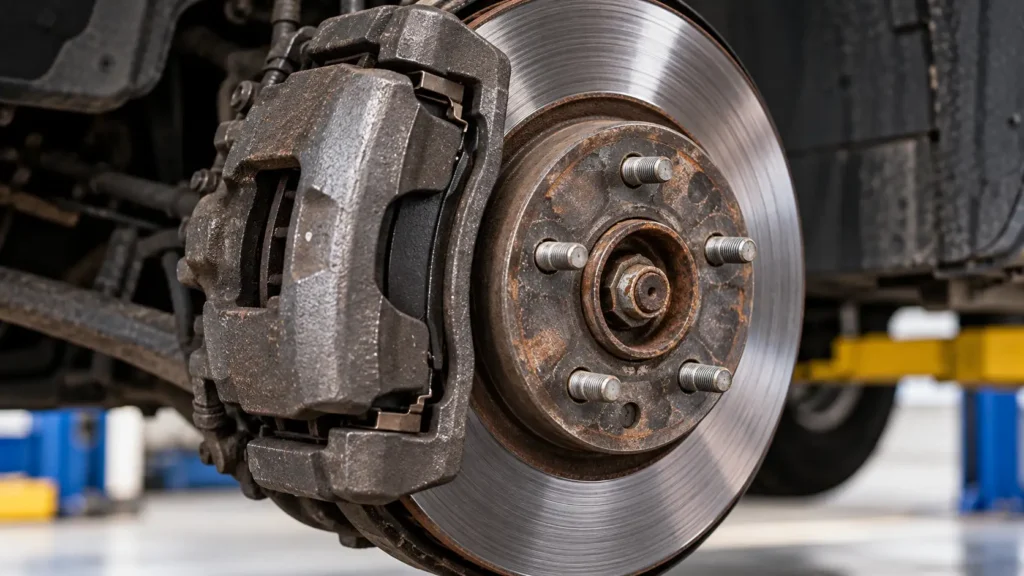
Squeaking, grinding, or clicking brakes usually mean something in the braking system is worn, loose, contaminated, or no longer moving the way it should. The sound itself can give you a clue. Squeaking often points to worn brake pads, moisture, glazing, or brake dust. Grinding can indicate severely worn pads or metal-to-metal contact. Clicking may come from loose hardware, shifting brake pads, caliper components, or other parts moving under braking. Because brakes are a safety-critical system, any new or persistent noise should be inspected rather than ignored.
What Causes Brakes to Squeak?
Squeaking is one of the most common brake complaints, and it does not always mean the brakes are failing. Moisture can create a thin layer of surface rust on brake rotors after a vehicle sits overnight or during wet Lower Mainland weather. That can cause temporary squeaking during the first few stops. Brake dust, certain pad materials, glazed brake pads, worn pads, or vibration between brake components can also create a high-pitched squeal. Some brake pads include wear indicators designed to make noise when the friction material becomes thin. If the squeaking is becoming more frequent or happens every time you brake, it is worth having the system checked. A professional brake inspection can determine whether the noise is caused by normal surface conditions, worn pads, damaged hardware, or another issue.
Why Do My Brakes Grind?
Grinding is more serious than an occasional squeak. A harsh metal-on-metal grinding sound can mean the brake pad friction material has worn away and the metal backing plate is contacting the brake rotor. If that happens, braking performance may be reduced and the rotor can be damaged quickly. Grinding can also come from debris trapped between components, severely corroded parts, or other mechanical problems, but it should never be treated as normal. If the grinding happens every time you brake, avoid unnecessary driving and have the vehicle inspected as soon as possible.
What Causes a Clicking Sound When Braking?
Clicking noises can happen when a brake component moves slightly when the brakes are applied or released. Possible causes include loose or worn brake hardware, pads shifting inside the caliper bracket, damaged anti-rattle clips, caliper movement, or components that are not seated correctly. A clicking sound may seem less urgent than grinding, but it still means something should be inspected. Brake components are designed to remain secure while allowing controlled movement. If a part is moving more than it should, the cause needs to be identified.
Can New Brakes Make Noise?
Yes. New brake pads and rotors can sometimes make light noise while the surfaces bed in, especially during the first several drives. However, loud grinding, constant squealing, heavy vibration, or clicking should not automatically be dismissed just because the brakes were recently replaced. Improper installation, incorrect hardware, contamination, uneven rotor surfaces, or other problems can still cause noise. If the sound is getting worse instead of better, the brakes should be rechecked.
Why Do My Brakes Squeak Only in the Morning?
Morning brake squeak is common, particularly in damp climates like Delta and the Lower Mainland. Overnight moisture can settle on the brake rotors and create a very thin layer of surface rust. The first few brake applications remove that layer, which may cause a brief squeal or scraping sound. If the noise disappears quickly and the brakes otherwise feel normal, it may not indicate a problem. If the sound continues after several stops, becomes louder, or is accompanied by vibration or reduced braking performance, it should be inspected.
Can Brake Dust Cause Squeaking?
Yes. Brake dust can collect around the pads, rotors, and caliper components. Depending on the brake pad material and design, that buildup can contribute to vibration and high-frequency squealing. Brake dust alone does not necessarily mean something is damaged, but persistent noise should still be evaluated because worn pads or other conditions may be contributing at the same time.
Can Worn Brake Pads Sound Different Before They Fail?
They can. Some pads squeal as the wear indicator begins contacting the rotor. Others may make a scraping or grinding sound once the friction material becomes extremely thin. You may also notice changes in pedal feel, longer stopping distances, vibration, or the vehicle pulling during braking. The goal is to replace worn components before they reach the point of metal-to-metal contact. Waiting until the brakes begin grinding can turn a routine pad replacement into a more expensive repair involving rotors and possibly other components.
Why Do My Brakes Make Noise but Still Stop Normally?
Brake noise can begin before you notice a major change in stopping performance. That is one reason it is easy to ignore. The vehicle may still stop normally even though pads are becoming worn, hardware is moving, surfaces are glazed, or another issue is developing. Brake performance can also deteriorate gradually, making the change harder to notice. A noise is often an early warning rather than proof that the brakes have already failed.
Should I Keep Driving if My Brakes Are Grinding?
Driving should be minimized. Grinding can indicate direct metal contact within the brake system, which can quickly damage rotors and reduce braking performance. If the brake pedal feels soft, the vehicle pulls strongly, braking performance is reduced, or you hear loud continuous grinding, stop driving and arrange an inspection. The longer metal-to-metal contact continues, the more likely the repair will become larger and more expensive.
Can Clicking Come From Something Other Than the Brakes?
Yes. Suspension, steering, wheel, axle, or drivetrain components can sometimes create clicking noises that seem like they are coming from the brakes. That is why the conditions surrounding the sound matter. Does it happen only while braking? Only while turning? Only at low speed? Does it happen once when changing direction or repeatedly? Those details help a technician narrow down the source. A proper inspection should confirm the sound rather than assuming it comes from one specific component.
Can Brake Noise Be Prevented?
Not every brake noise can be prevented, but proper maintenance can reduce the likelihood of some problems. Regular inspections can catch worn pads, damaged hardware, sticking components, uneven rotor wear, and other issues before they create more noticeable symptoms. Using correct parts, proper installation procedures, and maintaining clean contact surfaces also makes a difference. For vehicles driven frequently in wet conditions or heavy stop-and-go traffic, brake components may need closer attention because moisture, corrosion, and repeated braking can accelerate wear.
When Is Brake Noise an Emergency?
Brake noise becomes more urgent when it is accompanied by changes in braking performance. Stop driving and have the vehicle inspected if you notice severe grinding, a soft or sinking brake pedal, greatly increased stopping distance, strong pulling while braking, fluid leaking near a wheel, or a brake warning light combined with poor braking performance. Noise by itself does not always mean immediate brake failure, but changes in how the vehicle stops should never be ignored.
Don’t Ignore a Brake Noise That Keeps Coming Back
A brief squeak on a damp morning may be harmless. Grinding, repeated clicking, or persistent squealing is different. The safest approach is to pay attention to whether the sound is temporary, getting worse, or accompanied by changes in how the vehicle brakes. For drivers in Delta and across the Lower Mainland, Blue Wrench Auto provides brake service for all makes and models to identify the actual cause of squeaking, grinding, or clicking before a minor issue develops into a larger repair. If your brakes are making a new or persistent noise, book an appointment with Blue Wrench Auto and have the system inspected before the problem gets worse.