
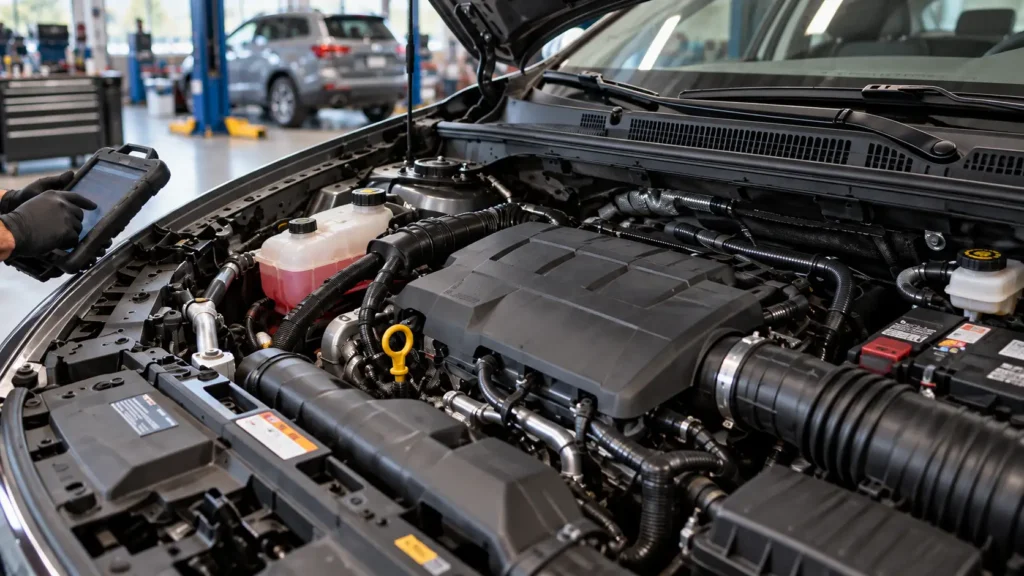
Engine problems don’t always begin with a breakdown. More often, your vehicle starts giving you small warnings first. A check engine light, rough idle, unusual noises, smoke, loss of power, overheating, fluid leaks, poor fuel economy, difficult starting, or unusual smells can all indicate that something isn’t working correctly. Some problems are minor when caught early but can become much more expensive if they’re ignored. Knowing what to watch for gives you a better chance of dealing with an engine problem before it turns into a major repair.
1. The Check Engine Light Comes On
The check engine light is one of the most obvious signs that your vehicle has detected a problem, but it doesn’t tell you exactly what’s wrong. It can be triggered by issues ranging from emissions-related faults and ignition problems to fuel delivery problems, sensors, or internal engine concerns.
A steady check engine light generally means the vehicle should be diagnosed soon. A flashing check engine light is more urgent because it can indicate an active misfire that may damage the catalytic converter or other components.
The mistake is assuming the light can be diagnosed simply by reading a fault code. A code identifies the system where the vehicle detected a problem, not necessarily the part that should be replaced. Proper testing is needed to determine the actual cause.
If your warning light is on or the engine isn’t running normally, Blue Wrench Auto provides professional engine service in Delta to help identify what’s causing the problem before unnecessary parts are replaced.
2. The Engine Is Running Rough or Shaking
Your engine should run relatively smoothly at idle. If the vehicle suddenly starts shaking, vibrating, stumbling, or feeling uneven while stopped, something may be interfering with normal combustion.
Common causes can include worn spark plugs, ignition coil problems, vacuum leaks, fuel delivery issues, sensor faults, or engine compression problems.
A rough idle may seem minor if the vehicle still drives, but repeatedly operating an engine with a misfire can cause additional damage. It can also lead to higher fuel consumption and increased emissions.
If the roughness gets worse, the check engine light begins flashing, or the vehicle feels unsafe to drive, the problem should be checked promptly.
3. You Hear Knocking, Tapping, or Other Unusual Engine Noises
New engine noises deserve attention, especially if they become louder or change with engine speed.
A tapping sound can sometimes be related to valve train components, low oil pressure, or lubrication problems. Knocking or heavy metallic sounds may indicate more serious internal engine issues. Squealing, rattling, or grinding noises can also come from components driven by the engine rather than from the engine itself.
The sound alone usually isn’t enough to diagnose the problem accurately. Where the noise is coming from, when it happens, engine temperature, RPM, and driving conditions all matter.
If your engine suddenly develops a loud knocking or metallic sound, continuing to drive may increase the damage.
4. The Vehicle Is Losing Power
A noticeable loss of power is another warning sign that shouldn’t be ignored.
You might notice the vehicle struggling to accelerate, feeling sluggish on hills, hesitating when you press the accelerator, or requiring more throttle than usual to maintain speed.
Loss of power can result from ignition problems, fuel delivery issues, air intake restrictions, exhaust restrictions, turbocharger problems on equipped vehicles, sensor faults, or internal engine problems.
Modern vehicles may also deliberately reduce engine power when the computer detects a serious fault. This is sometimes called reduced-power or limp mode and is designed to limit further damage.
If the loss of power appears suddenly or is accompanied by warning lights, unusual noises, or smoke, the vehicle should be inspected before continuing normal driving.
5. Smoke Is Coming From the Exhaust
Some visible exhaust vapour is normal, especially during colder Lower Mainland mornings. Persistent smoke after the engine has warmed up can be a different story.
Blue exhaust smoke can indicate that engine oil is entering the combustion chamber. Thick white smoke can sometimes point to coolant entering the engine, while excessive black smoke can indicate that too much fuel is being burned.
The exact cause depends on the vehicle and the conditions in which the smoke appears. A brief puff during startup may have a different cause than constant smoke while accelerating.
Persistent exhaust smoke should be diagnosed rather than ignored, particularly if you’re also noticing fluid loss, overheating, rough running, or reduced performance.
6. The Engine Is Overheating
An engine that regularly runs hotter than normal needs immediate attention.
Modern engines operate within a carefully controlled temperature range. When that temperature rises too far, engine components can become damaged.
Overheating can be caused by low coolant, leaks, thermostat problems, cooling fan failures, water pump problems, radiator restrictions, or more serious internal engine concerns.
If the temperature gauge enters the hot zone or an overheating warning appears, continuing to drive can turn a repairable cooling problem into severe engine damage.
Never open a radiator cap or pressurized cooling system while the engine is hot. Coolant can be under significant pressure and may cause serious burns.
7. You Notice Oil or Coolant Leaks
Small spots underneath your vehicle can sometimes provide an early warning of a developing engine problem.
Engine oil leaks may come from seals, gaskets, covers, or other engine components. Coolant leaks can come from hoses, the radiator, water pump, thermostat housing, or other parts of the cooling system.
A minor leak doesn’t always mean the engine itself is failing, but allowing engine oil or coolant levels to drop too far can cause serious damage.
Pay attention to where the fluid appears, its colour, and whether the leak is becoming worse. If the engine oil pressure warning comes on or the engine begins overheating, stop driving until the cause has been determined.
8. Your Fuel Economy Suddenly Gets Worse
A noticeable drop in fuel economy can sometimes be an early sign that the engine isn’t operating efficiently.
Ignition problems, failing sensors, fuel delivery issues, air intake problems, engine temperature problems, or other faults can cause the engine to use more fuel than normal.
Fuel economy naturally changes with traffic, weather, driving habits, tire pressure, and trip length. The key is an unexplained change that continues even though your driving routine hasn’t changed much.
If you’re suddenly visiting the fuel pump more often and there are other symptoms such as rough running, hesitation, or a warning light, it’s worth having the vehicle checked.
9. The Engine Is Becoming Difficult to Start
An engine that takes longer to start or requires several attempts shouldn’t be dismissed as normal.
Hard starting can be related to the battery or starter, but it can also involve ignition, fuel pressure, sensors, timing, or engine compression.
Pay attention to what happens when you try to start the vehicle. If the engine cranks normally but takes longer to actually begin running, that points in a different direction than an engine that barely turns over.
A pattern can also help. For example, a vehicle that only struggles when cold, only when hot, or after sitting overnight may provide useful clues during diagnosis.
10. You Notice Burning, Fuel, or Other Unusual Smells
A new smell coming from the vehicle can be another sign that something needs attention.
A burning-oil smell may indicate oil leaking onto a hot engine or exhaust component. A sweet smell can sometimes be associated with coolant. A strong fuel smell may indicate a fuel system or combustion problem.
Not every smell comes directly from the engine, but strong or recurring odours shouldn’t be ignored.
If you smell fuel, see smoke, or notice signs of fluid leaking onto hot components, avoid continuing to drive until the vehicle can be safely inspected.
Can You Keep Driving With Engine Trouble?
It depends entirely on the symptom.
A minor change in performance may allow enough time to schedule an inspection, while overheating, flashing warning lights, heavy knocking, severe loss of power, major fluid leaks, or thick smoke can require you to stop driving immediately.
The safest approach is to pay attention to how quickly the symptom appeared and whether it’s getting worse. A small problem that suddenly becomes more severe is a strong reason to stop and have the vehicle checked.
When in doubt, continuing to drive simply to see whether the problem disappears can turn a manageable repair into a much larger one.
Why Early Engine Diagnosis Matters
Many engine problems become more expensive when the original warning signs are ignored.
A misfire can damage the catalytic converter. An oil or coolant leak can eventually allow fluid levels to become dangerously low. An overheating problem can damage cylinder heads, head gaskets, or internal engine components.
That doesn’t mean every warning sign leads to a major repair. Quite the opposite. Catching problems early is often what prevents them from becoming major repairs.
That’s why proper diagnosis matters more than guessing based on a symptom or replacing the first part associated with a fault code.
Have Engine Problems Checked Before They Get Worse
If your vehicle is running rough, losing power, overheating, leaking fluid, making unusual noises, or showing another warning sign, getting it inspected early can help prevent additional damage.
Blue Wrench Auto provides professional engine repair for drivers in Delta and across the Lower Mainland, with diagnosis based on the actual cause of the problem rather than replacing parts unnecessarily.
If your vehicle is showing signs of engine trouble, book a service with Blue Wrench Auto and have the issue checked before a small warning becomes a much larger repair.