
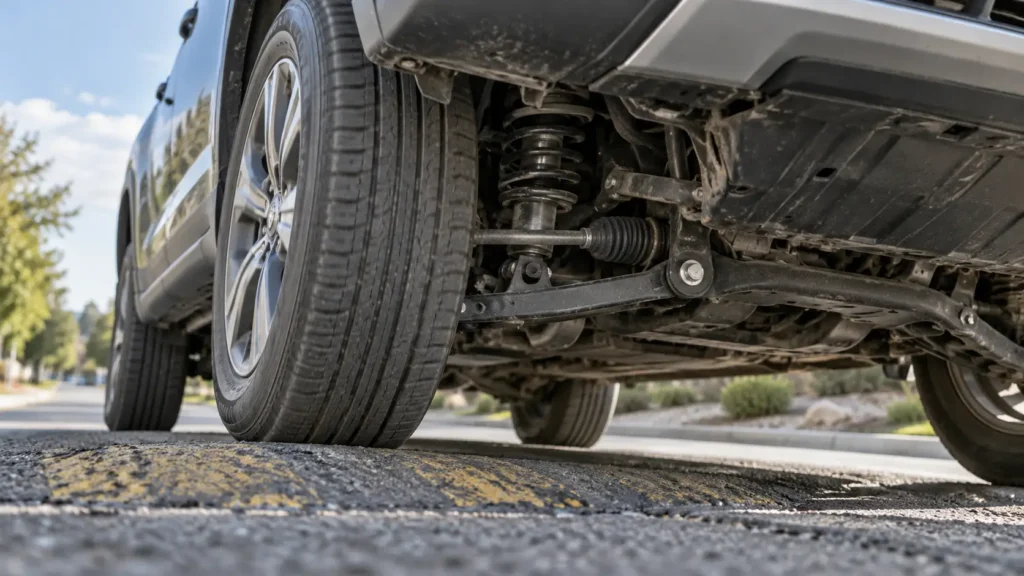
If your vehicle makes a clunking, knocking, or thumping sound when you drive over bumps, potholes, speed bumps, or uneven pavement, something in the suspension or steering system may be loose, worn, or damaged. The noise can come from several different components, and the exact cause often depends on where the sound is coming from, when it happens, and whether you notice changes in steering or ride quality at the same time. For drivers in Delta and throughout the Lower Mainland, rough pavement and frequent road imperfections can make developing suspension problems much easier to notice.
Worn Sway Bar Links Are a Common Cause
Sway bar links connect the sway bar to the suspension and help control body movement when your vehicle corners or travels over uneven pavement. The links contain joints or bushings that can wear over time. Once enough play develops, the link can move or knock against nearby components as the suspension travels up and down. A worn sway bar link often produces a light but distinct clunking or knocking noise when one wheel passes over a bump or when travelling slowly over uneven pavement.
Worn Suspension Bushings Can Create Knocking Sounds
Your suspension uses rubber or synthetic bushings to cushion movement between metal components. These bushings are found in areas such as control arms, sway bars, and other suspension mounting points. As they age, they can crack, compress, separate, or deteriorate. This allows more movement than the suspension was designed to have. Instead of absorbing movement quietly, the affected component may shift and produce a dull clunk. Because several suspension parts use bushings, an inspection is usually required to determine which one is causing the noise.
Ball Joints Can Develop Excessive Movement
Ball joints allow suspension components to move while the wheels steer and travel up and down. When a ball joint begins wearing internally, excessive play can develop inside the joint. This may create a clunk when the suspension changes direction suddenly, such as when a wheel drops into a pothole or climbs over a bump. Ball joints are important to wheel control, so unusual noises accompanied by loose steering, uneven tire wear, or changes in handling shouldn’t be ignored.
Control Arm Problems Can Cause a Heavier Clunk
Control arms help keep each wheel positioned correctly while still allowing the suspension to move. The control arm itself may be damaged, but more commonly its bushings or ball joint develop wear. A control arm that moves more than it should can produce a deeper clunk under braking, acceleration, or when travelling across rough pavement. If you’re hearing noises that seem to come from underneath the front of the vehicle, a steering and suspension service in Delta can help identify the exact component that’s moving before parts are replaced unnecessarily.
Struts and Shock Absorbers Can Also Make Noise
Struts and shock absorbers control suspension movement and help keep the tires in contact with the road. Although people often associate worn shocks or struts with bouncing, they can also cause knocking or clunking noises. Internal wear, damaged mounting hardware, or excessive movement at the upper mount can all create noise as the suspension compresses and rebounds. A vehicle that continues bouncing after a bump, feels unstable over uneven pavement, or makes noise from one corner may need the strut or shock assembly inspected.
A Worn Strut Mount Can Sound Like a Suspension Problem
The upper strut mount connects the strut assembly to the vehicle body. Depending on the design, it may also contain a bearing that allows the assembly to rotate as you steer. When the mount or bearing wears, it can produce clunks, knocks, or popping sounds over bumps and sometimes while turning the steering wheel. Because the sound can travel through the vehicle’s structure, it isn’t always obvious that the upper mount is responsible.
Loose Suspension Hardware Shouldn’t Be Overlooked
Not every clunk means a major component has failed. A loose bolt, mounting point, bracket, or other piece of suspension hardware can produce a surprisingly loud noise. This is one reason diagnosing a clunk based only on sound can be difficult. The suspension needs to be inspected for movement so the technician can determine exactly where unwanted play exists.
Could the Noise Be Coming From Something Other Than the Suspension?
Yes. Items that aren’t part of the suspension can sometimes sound almost identical to suspension problems. A loose spare tire, jack, exhaust component, heat shield, underbody panel, or item moving around in the trunk can produce a knock over bumps. Before assuming that an expensive repair is needed, remove loose items from the vehicle and make sure the spare tire and jack are secured. If the noise remains, the steering and suspension system should be checked.
Why Does the Clunk Sometimes Only Happen at Low Speeds?
At lower speeds, individual suspension movements are often easier to hear because there’s less tire, wind, and engine noise covering them up. Driving slowly over speed bumps, driveway entrances, or uneven parking lots can also cause one wheel to move independently of the other, which may expose play in sway bar links, bushings, mounts, or ball joints. A noise that disappears at highway speeds doesn’t necessarily mean the problem has disappeared.
Why Does the Noise Seem Worse in Cold Weather?
Rubber bushings and suspension components can become stiffer when temperatures fall. A worn bushing may therefore transmit more vibration or movement during colder weather, making a clunk or creak easier to hear. Moisture, road salt, and winter driving conditions in the Lower Mainland can also contribute to corrosion and deterioration around suspension hardware and mounting points.
Can You Keep Driving With a Clunking Suspension?
That depends entirely on what’s causing the sound. A minor noise from a worn bushing may not create an immediate safety problem, while excessive play in a ball joint or another critical suspension component can affect wheel control. Because it’s difficult to determine severity from the sound alone, persistent clunking should be inspected rather than simply monitored. If the noise is accompanied by wandering steering, pulling, vibration, uneven tire wear, instability, or a sudden change in handling, have the vehicle checked as soon as possible.
Will Replacing the Shocks Automatically Fix the Clunk?
Not necessarily. Clunking noises are frequently blamed on shocks or struts, but several components can create nearly identical sounds. Replacing parts without confirming the source of the movement can leave you with the same noise after the repair. A proper diagnosis should include checking joints, bushings, links, mounts, control arms, shocks or struts, and their related hardware before deciding what needs replacement.
Can Suspension Clunks Be Prevented?
Normal suspension wear can’t be eliminated completely, but catching problems early can prevent minor wear from affecting surrounding components. Pay attention when your vehicle starts sounding or handling differently. Avoid hitting potholes at speed when possible, have unusual tire wear investigated, and include suspension checks as part of regular vehicle maintenance. After a hard pothole impact or curb strike, an inspection can also identify damage before it turns into a larger problem.
Get the Noise Properly Diagnosed
A clunk over bumps is your vehicle’s way of telling you that something is moving differently than it should. The cause could be as simple as a loose component or as significant as wear in an important steering or suspension joint. Instead of replacing parts based on the sound alone, Blue Wrench Auto can inspect the vehicle, locate the source of the movement, and explain what actually needs attention. If you’ve started hearing clunking, knocking, or unusual suspension noises, consider having the vehicle inspected through our professional auto repair services in Delta.
Schedule an Inspection at Blue Wrench Auto
If your vehicle clunks over potholes, speed bumps, driveway entrances, or rough roads around Delta and the Lower Mainland, don’t wait for the sound to become worse before finding out what’s causing it. Book an inspection with Blue Wrench Auto and we’ll help determine where the noise is coming from and what, if anything, needs to be repaired.