
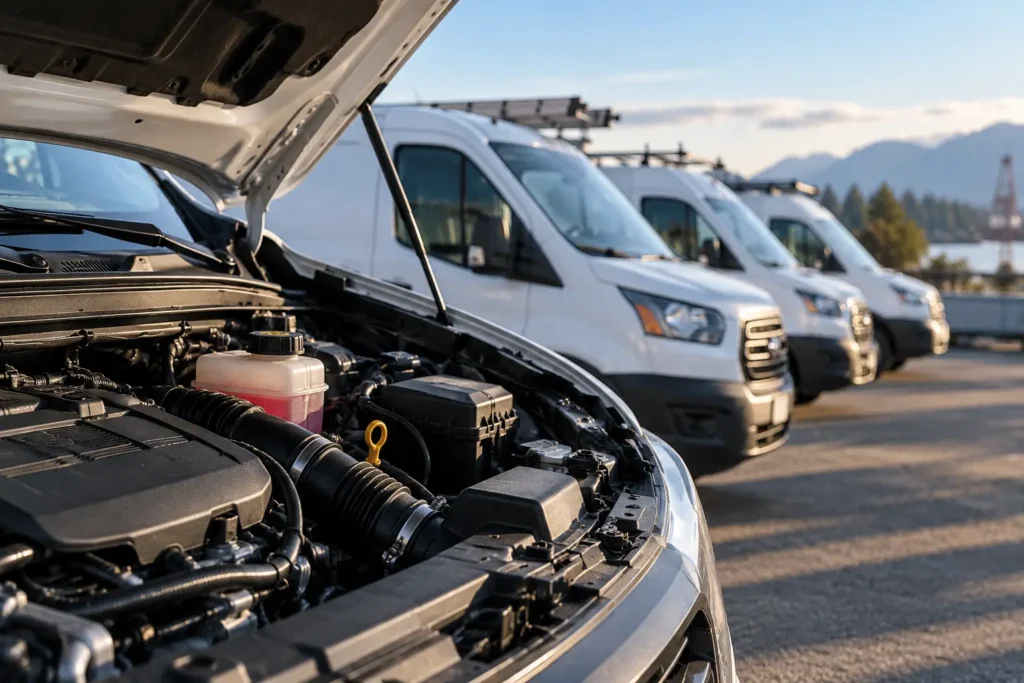
For businesses that depend on vans, service vehicles, or work trucks, vehicle downtime can quickly become more expensive than the repair itself. Preventative fleet maintenance reduces downtime by catching wear, fluid issues, brake problems, battery weakness, tire concerns, and developing mechanical faults before they cause a breakdown. Instead of waiting for a vehicle to fail unexpectedly, scheduled maintenance gives fleet operators more control over when service happens and how long vehicles stay off the road.
Preventative Maintenance Finds Problems Before They Become Breakdowns
Many breakdowns don’t happen without warning. Components often show signs of wear long before they fail completely. A technician may find a deteriorating belt, leaking hose, weak battery, worn brake component, fluid leak, or tire issue during a scheduled inspection. Repairing the problem at that stage can often be planned around the business schedule. Ignoring the same problem until the vehicle stops working creates an emergency. The vehicle may need towing, parts may need to be ordered unexpectedly, and the repair can interfere with jobs that were already scheduled. For businesses operating throughout Delta and the Lower Mainland, regular fleet maintenance in Delta can help identify those problems while vehicles are still operating normally.
Planned Service Is Easier to Manage Than an Unexpected Breakdown
A scheduled maintenance appointment can be arranged around quieter periods, shift changes, or days when a particular vehicle isn’t needed as heavily. An unexpected breakdown gives you no such flexibility. If a work van fails at 9:00 in the morning with appointments already booked, the business may suddenly need to move employees, tools, materials, or deliveries into another vehicle. That can affect the rest of the day even if the repair itself is relatively minor. Preventative maintenance changes the situation from reacting to failure to planning around service.
Regular Oil and Fluid Checks Help Protect Major Components
Engine oil, coolant, transmission fluid, brake fluid, and other vehicle fluids all perform important jobs. Low levels, contamination, leaks, or neglected service can contribute to mechanical problems and unexpected downtime. For example, a small coolant leak may initially leave only a few drops under the vehicle. If it continues unnoticed, the vehicle may eventually overheat. Likewise, an oil leak that seems minor can become more serious if the engine oil level drops too far. Checking fluid levels and condition during scheduled maintenance gives technicians a chance to identify leaks and deterioration before they become roadside problems.
Brake Maintenance Can Prevent Vehicles From Being Taken Out of Service
Fleet vehicles can accumulate kilometres quickly, especially when they’re used for deliveries, service calls, construction, or other daily business operations. That can mean brakes wear faster than they would on a lightly driven personal vehicle. Regular inspections can identify worn pads, rotor problems, sticking brake components, fluid concerns, or other issues before braking performance becomes unsafe. Waiting until brakes begin grinding or braking performance noticeably changes can lead to additional component damage and force the vehicle out of service with very little notice.
Battery Testing Can Prevent a No-Start Morning
A vehicle that won’t start at the beginning of the workday can disrupt an entire schedule before the first job even begins. Fleet vehicles may be exposed to frequent short trips, repeated starting, accessories, electrical equipment, and long periods parked between shifts. All of these factors can affect battery performance. Testing battery condition during routine maintenance can help identify declining capacity before the battery reaches the point where it can no longer reliably start the vehicle. The charging system and battery connections can also be inspected at the same time, helping catch problems that might otherwise look like a simple battery failure.
Tire Maintenance Reduces Avoidable Roadside Problems
Tires are another common source of preventable downtime. Low pressure, uneven wear, damaged sidewalls, alignment issues, or excessive tread wear can all increase the chance that a vehicle needs to be removed from service unexpectedly. Fleet vehicles often carry equipment, tools, or cargo, which can make proper tire condition even more important. Regular tire inspections and pressure checks can identify concerns early enough to schedule replacement or repair before a tire problem interrupts the workday.
Maintenance Records Help You Spot Patterns Across the Fleet
Preventative maintenance becomes even more useful when service history is tracked consistently. If one vehicle repeatedly develops the same problem, maintenance records can reveal the pattern. They can also show when major services are approaching and help avoid relying on memory to determine what each vehicle needs. For a business with several vehicles, that visibility matters. Instead of waiting for drivers to report problems, the company can see which vehicles are due for service, which components have already been replaced, and where recurring expenses are developing. That makes maintenance more predictable and helps reduce surprise downtime.
Driver Reports Work Best When Combined With Scheduled Inspections
Drivers spend more time with fleet vehicles than anyone else, so their observations can provide valuable early warnings. New vibrations, slow starting, warning lights, unusual noises, steering changes, braking changes, or fluid spots should be reported instead of ignored. But driver feedback shouldn’t replace scheduled maintenance. Some developing problems don’t produce obvious symptoms from the driver’s seat. A vehicle may feel completely normal while a component is already approaching the point where it needs attention. Combining driver reports with routine professional inspections gives fleet operators a better chance of catching problems before failure.
Preventative Maintenance Can Reduce Repair Severity
One of the biggest benefits of preventative maintenance is that it can stop a smaller problem from damaging other components. A minor coolant leak that is repaired early may require a relatively straightforward fix. If that leak causes severe overheating, the repair could become much more involved. The same principle applies to worn brakes, leaking fluids, damaged belts, charging-system problems, and many other vehicle issues. Preventative maintenance doesn’t eliminate every repair. Vehicles still wear out and unexpected failures can still happen. What it does is reduce the number of problems that become more serious simply because they weren’t found early enough.
How Often Should Fleet Vehicles Be Inspected?
There isn’t one maintenance interval that works for every fleet. The right schedule depends on the vehicle manufacturer’s recommendations, mileage, engine hours where applicable, vehicle age, operating conditions, loads, and how the vehicles are used. A delivery vehicle that operates all day in stop-and-go traffic may need attention more frequently than a vehicle that travels longer highway routes. Businesses should start with the manufacturer’s maintenance schedule and adjust inspections based on actual fleet use. Vehicles experiencing heavy-duty use, frequent idling, repeated short trips, or demanding operating conditions may benefit from more frequent checks.
Does Preventative Maintenance Actually Save Money?
In many cases, the biggest savings don’t come from avoiding maintenance costs. They come from avoiding the consequences of unexpected downtime. A disabled vehicle can mean towing expenses, emergency repairs, missed appointments, lost productivity, overtime, rental vehicles, or rearranging the rest of the fleet. That makes downtime a business expense, not just an automotive expense. Scheduled maintenance creates a more predictable cost and gives businesses greater control over when vehicles are temporarily taken out of service.
Build Maintenance Around Your Business Schedule
A good fleet maintenance plan shouldn’t make operating the business more difficult. The goal is to service vehicles before problems interfere with operations and to schedule maintenance in a way that keeps as much of the fleet available as possible. Blue Wrench Auto provides commercial vehicle maintenance for businesses in Delta and throughout the Lower Mainland, helping fleet operators keep up with inspections, routine maintenance, and developing repair needs before they lead to unnecessary downtime. If your business depends on reliable vehicles every day, book fleet service with Blue Wrench Auto and build a maintenance schedule around how your vehicles are actually used.