
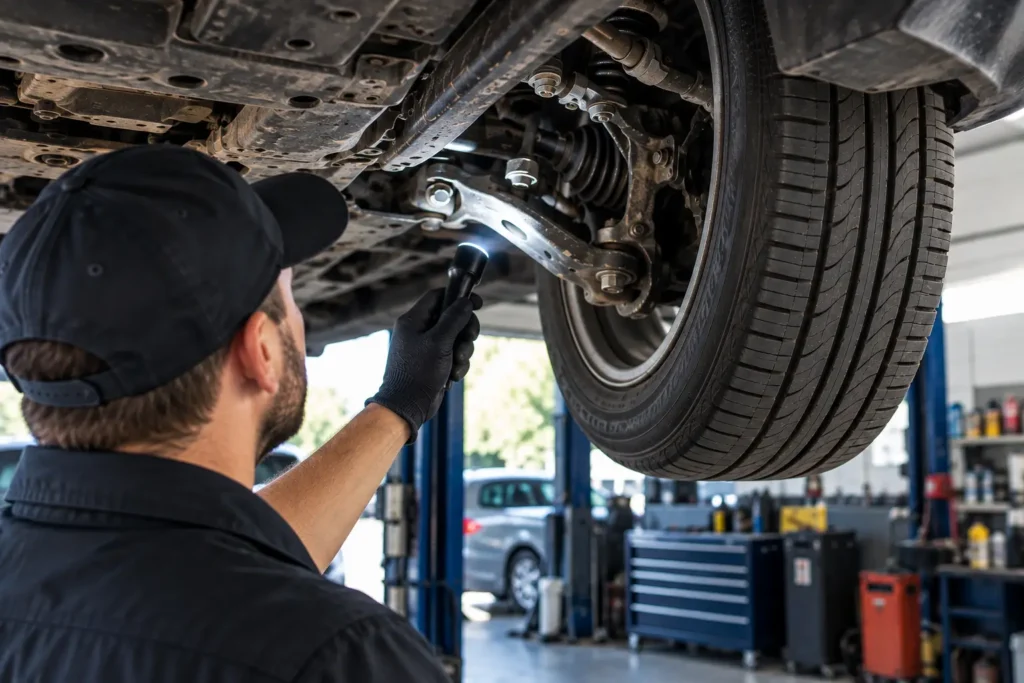
A professional vehicle inspection is a detailed check of the systems and components that affect your vehicle’s safety, reliability, performance, and overall condition. Depending on the vehicle and reason for the inspection, a technician may examine the brakes, tires, steering and suspension, fluid levels, battery and electrical system, lights, belts and hoses, exhaust, underbody, engine compartment, and other visible mechanical components. The goal isn’t simply to find problems. A proper inspection helps identify existing wear, developing concerns, and maintenance items before they become more serious or expensive.
Why a Professional Vehicle Inspection Matters
A vehicle can feel completely normal while still having worn components or developing problems that aren’t obvious from the driver’s seat. Tires can begin wearing unevenly, brake components can approach their service limits, suspension parts can develop play, and fluids can start leaking long before a warning light appears. A professional inspection gives you a clearer picture of the vehicle’s current condition so you can make maintenance and repair decisions based on actual findings rather than guesswork.
Tires and Wheel Condition
The tires are one of the first areas that should be checked because they directly affect braking, steering, traction, and stability. A technician will typically examine tread depth, tire condition, inflation, and wear patterns. Cracks, bulges, cuts, punctures, or uneven wear can indicate that a tire needs attention. Wear patterns may also provide clues about alignment, suspension, or inflation problems. The wheels can be visually checked for obvious bends, cracks, or damage that may affect how the vehicle drives.
Brake System
A professional inspection should include the visible condition of the braking system. This may involve checking brake pad or shoe wear, rotors or drums, brake hoses, visible brake lines, and signs of fluid leakage. Brake fluid condition or level may also be checked where appropriate. Squealing or grinding isn’t the only indication of brake wear. A vehicle can still stop normally while brake components are approaching the point where service will soon be required.
Steering Components
Steering components help keep the vehicle responsive and predictable. During an inspection, a technician may check tie rods, steering linkage, boots, joints, and related components for looseness, damage, deterioration, or excessive movement. Steering issues aren’t always obvious during everyday driving, particularly when wear develops gradually. Catching excessive play early can help prevent further wear and identify concerns before steering feel becomes noticeably affected.
Suspension Components
The suspension keeps the tires properly controlled as the vehicle travels over bumps, corners, and uneven roads. Shocks, struts, springs, control arms, ball joints, bushings, sway bar links, and mounting points may be examined depending on the vehicle’s design. The technician is looking for damaged parts, leaking shocks or struts, cracked bushings, excessive movement, corrosion, and other signs of wear. If you want a clearer understanding of your vehicle’s current mechanical condition, a vehicle inspection in Delta can help identify these issues before they develop into more noticeable handling or tire-wear problems.
Fluid Levels and Visible Leaks
Vehicles rely on several fluids to operate properly. During an inspection, accessible fluids may be checked for correct level and obvious signs of contamination or deterioration. Depending on the vehicle, this can include engine oil, coolant, brake fluid, power steering fluid, transmission fluid, and windshield washer fluid. The technician may also look underneath the vehicle and around the engine compartment for signs of leaks. Even a small leak can be useful information because it may show where a seal, hose, gasket, or other component is beginning to deteriorate.
Battery and Charging System
A battery inspection can include checking the battery’s physical condition, connections, terminals, and signs of corrosion. Depending on the inspection being performed, battery voltage or starting and charging performance may also be tested. A battery can weaken gradually without giving much warning, especially as temperatures change. Corroded terminals or poor connections can also contribute to slow starting and electrical problems even when the battery itself is still usable.
Lights and Basic Electrical Equipment
Exterior lighting is another important part of a vehicle inspection. Headlights, brake lights, turn signals, reverse lights, licence plate lights, and other exterior lamps may be checked for proper operation. Depending on the scope of the inspection, the technician may also check the horn, warning indicators, windshield wipers, and other basic electrical or safety-related equipment. Small electrical issues are easy to overlook but can affect both visibility and communication with other drivers.
Belts and Hoses
Belts and hoses operate in a demanding environment where they’re exposed to heat, vibration, pressure, and age. A technician can visually inspect accessible belts for cracking, glazing, fraying, contamination, or other deterioration. Hoses may be checked for cracking, swelling, leaks, damaged connections, or areas that appear excessively soft or brittle. Replacing a worn component before it fails is usually far easier than dealing with the consequences of a broken belt or ruptured hose on the road.
Engine Compartment
A professional inspection doesn’t automatically mean disassembling the engine. Instead, the technician generally checks accessible components for visible concerns. This may include fluid leaks, damaged wiring, loose connections, deteriorated hoses, unusual contamination, or signs that something has been improperly repaired or modified. If the vehicle has a warning light or specific symptom, additional diagnostic testing may be recommended separately from the general inspection.
Exhaust System
The exhaust system runs underneath much of the vehicle and is exposed to water, road debris, temperature changes, and corrosion. During an inspection, visible exhaust components can be checked for damage, loose mounting points, deterioration, and obvious leaks. An exhaust issue may first appear as a rattle, unusual engine sound, or smell, but some problems can exist before the driver notices anything unusual.
Underbody and Visible Structural Areas
Looking underneath the vehicle can reveal issues that aren’t visible during normal driving. A technician may check for damaged panels, loose shields, fluid leaks, corrosion, impact damage, and problems around mounting points. Lower Mainland drivers regularly encounter rain, standing water, road debris, potholes, and changing road conditions, so inspecting underneath the vehicle can provide useful information about its overall condition.
Windshield, Wipers, and Visibility
Good visibility is essential for safe driving. A vehicle inspection may include checking the windshield for significant chips or cracks, along with the condition and operation of the wiper blades. Washer operation may also be checked. Wipers that smear water instead of clearing it can become a serious problem during heavy rain, particularly during wet driving conditions around Delta and the Lower Mainland.
What Happens If the Inspection Finds a Problem?
Finding a problem during an inspection doesn’t automatically mean everything needs to be repaired immediately. One of the most useful parts of a professional inspection is understanding the difference between something that requires immediate attention, something that should be planned for soon, and normal wear that can continue to be monitored. A technician should be able to explain what was found, why it matters, and how urgent it is so you can make an informed decision.
Does a Vehicle Inspection Include Diagnostic Testing?
Not always. A general inspection and diagnostic testing serve different purposes. An inspection looks at the overall condition of accessible vehicle systems and components. Diagnostics are usually more focused and may involve scan tools, electrical testing, pressure testing, or other procedures used to investigate a particular warning light, noise, drivability problem, or system fault. If the inspection uncovers something that requires deeper investigation, additional diagnostic work may be recommended.
How Often Should You Have Your Vehicle Inspected?
There isn’t one schedule that fits every vehicle. Age, mileage, driving conditions, service history, and how the vehicle is used all matter. Having the vehicle inspected during regular maintenance can help establish a pattern of its condition over time. An inspection is also useful before a long trip, after hitting a severe pothole, when purchasing a used vehicle, or whenever you notice changes in braking, steering, handling, noises, leaks, or tire wear.
A Good Inspection Helps You Plan Ahead
One of the biggest benefits of an inspection is that it gives you information before a problem becomes urgent. Knowing that brake pads are getting low, a tire is wearing unevenly, or a suspension bushing is beginning to deteriorate lets you plan repairs instead of being surprised by them. It also helps avoid replacing components unnecessarily because recommendations can be based on what is actually found on the vehicle.
Have Your Vehicle Properly Inspected
If you’re unsure about the condition of your car, truck, or SUV, a professional vehicle inspection at Blue Wrench Auto can provide a clearer picture of what needs attention now and what can be monitored for the future. Our team in Delta can examine the vehicle’s major safety and mechanical components and explain the findings in straightforward terms.
Book Your Vehicle Inspection in Delta
Whether you’re checking the condition of your daily driver, preparing for a road trip, investigating unusual wear, or simply want to stay ahead of maintenance, a thorough inspection can help you make better decisions about your vehicle. Book an inspection with Blue Wrench Auto and have your vehicle checked by experienced technicians in Delta, BC.