
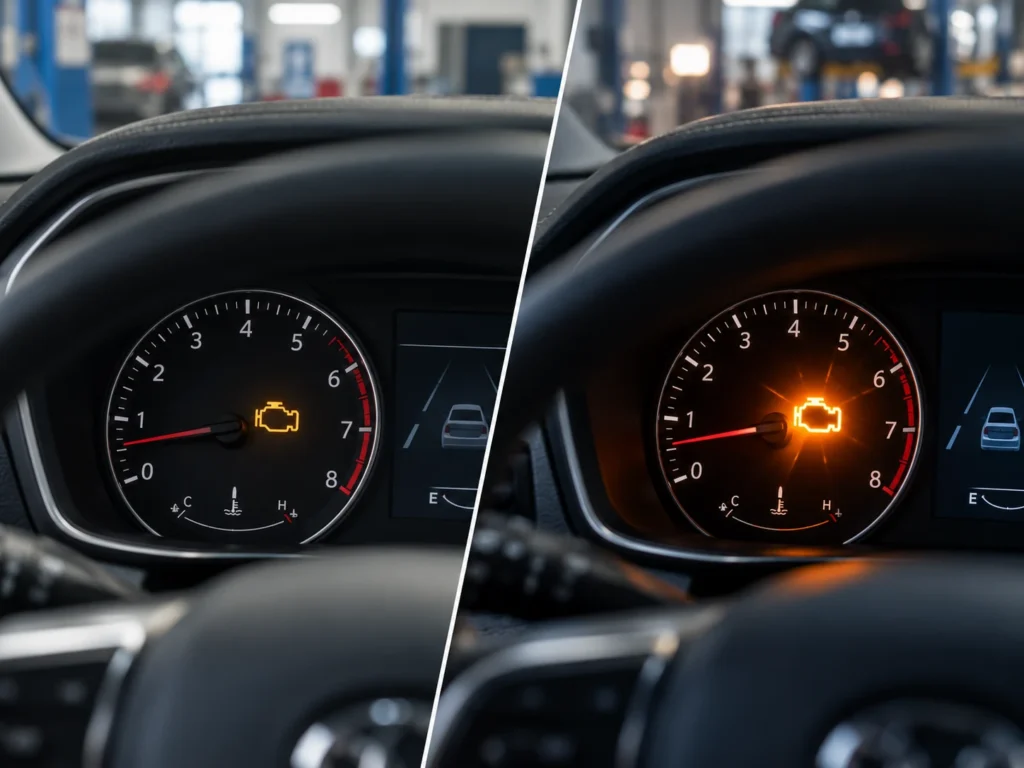
A solid check engine light usually means your vehicle has detected a problem that should be diagnosed soon, while a flashing check engine light is more urgent and can indicate an active misfire that may damage the catalytic converter or other components. The key difference is severity. A steady light often gives you some time to arrange an inspection, but a flashing light means you should reduce driving and have the vehicle checked as soon as possible.
What Does a Solid Check Engine Light Mean?
A solid check engine light means the vehicle’s onboard computer has detected a fault and stored a diagnostic trouble code. The problem may involve the engine, emissions system, ignition system, fuel delivery, sensors, or another monitored system. Some issues are relatively minor, while others can become more serious if ignored. The important thing is not to assume the light tells you exactly what needs to be replaced. A trouble code points technicians toward the system where the problem was detected, but further testing is usually needed to identify the actual cause. If the light is steady and the vehicle still feels normal, you can usually arrange an inspection without treating it as an immediate emergency.
What Does a Flashing Check Engine Light Mean?
A flashing check engine light is more serious. In many vehicles, it indicates an active misfire severe enough that unburned fuel may be entering the exhaust system. That fuel can overheat and damage the catalytic converter. You may also notice rough running, shaking, hesitation, reduced power, or a strong fuel smell. If the check engine light is flashing, continuing to drive aggressively or for a long distance can increase the risk of additional damage. Reduce your speed, avoid hard acceleration, and have the vehicle inspected as soon as possible.
Why Is a Flashing Light More Urgent?
The difference comes down to what the vehicle computer is detecting. A steady light often means the fault is present but not currently causing immediate damage. A flashing light can mean the problem is actively affecting combustion in a way that may damage expensive components. For example, a severe misfire can allow raw fuel to pass into the exhaust. The catalytic converter is designed to process exhaust gases, not large amounts of unburned fuel. If that continues, temperatures inside the converter can rise dramatically. That is why a flashing check engine light should be taken much more seriously than a steady one.
Can You Drive With a Solid Check Engine Light?
In many cases, yes, but only if the vehicle is otherwise running normally. If the light is solid and there are no major symptoms, you can usually drive carefully while arranging a diagnostic appointment. But you should pay attention to any changes. If the engine begins running rough, power drops suddenly, the vehicle starts overheating, you hear unusual noises, or the light begins flashing, the situation becomes more urgent. A solid light should not be ignored for weeks or months simply because the vehicle still seems to drive normally.
Can You Drive With a Flashing Check Engine Light?
Driving should be minimized. A flashing light usually means there is a fault severe enough that continuing to drive may cause more damage. If the engine is shaking badly, losing power, smelling strongly of fuel, or making unusual noises, it is safer to stop driving and have the vehicle inspected. In some cases, the vehicle may need to be towed rather than driven. The goal is to avoid turning one repair into several.
What Common Problems Can Cause a Solid Check Engine Light?
A steady light can be triggered by many different problems. Possible causes can include sensor faults, emissions-related issues, ignition problems, fuel delivery problems, air-intake issues, vacuum leaks, or problems within the engine management system. Sometimes the cause is relatively simple. Other times, the code is only the first clue in a more complicated diagnostic process. That is why proper testing matters. Blue Wrench Auto provides professional automotive diagnostics for drivers in Delta and the Lower Mainland to help determine what is actually causing the warning light instead of replacing parts based on guesses.
What Common Problems Can Cause a Flashing Check Engine Light?
A flashing light is commonly associated with an active engine misfire. Possible causes can include failed ignition coils, worn spark plugs, fuel injector problems, fuel delivery issues, air leaks, sensor problems, or internal engine faults. The exact cause varies by vehicle. What matters is that the misfire is severe enough to affect how the engine is running right now. That is why the vehicle may shake, hesitate, or lose power at the same time the light flashes.
Why Reading the Trouble Code Is Not Enough
Many drivers assume that a code reader tells you exactly which part is bad. It does not. A diagnostic trouble code tells you what condition the vehicle computer detected. For example, a code pointing to a lean condition does not automatically mean a sensor needs replacement. The cause could be a vacuum leak, fuel delivery problem, damaged wiring, intake leak, or another issue. Replacing a part simply because its name appears in a code description can lead to unnecessary repairs. A proper diagnosis combines the code with live data, testing, inspection, and the vehicle’s actual symptoms.
What If the Light Comes On and Then Goes Away?
Sometimes the check engine light can turn off by itself after the vehicle computer no longer detects the fault for a certain period. That does not always mean the problem is completely gone. The computer may still store the code as a history or pending fault. Intermittent issues can be especially difficult because they may only appear under certain temperatures, loads, speeds, or driving conditions. If the light has appeared more than once, having the stored codes checked can help identify a developing problem before it becomes more frequent.
What If the Check Engine Light Comes On Right After Fueling?
Sometimes drivers notice the light shortly after filling the fuel tank. On vehicles that monitor fuel-system vapour leaks, a loose or improperly sealed fuel cap can sometimes trigger an emissions-related warning. If your vehicle has a traditional fuel cap, make sure it is properly tightened. However, do not assume every check engine light after fueling is caused by the cap. If the light remains on, the system should still be diagnosed properly.
Can Cold Weather Trigger a Check Engine Light?
Cold Lower Mainland weather can expose existing problems, but cold temperatures alone are not usually the root cause. A weak ignition component, sensor problem, battery-related voltage issue, or fuel mixture problem may become more noticeable during colder starts. If the light only appears during cold weather or cold starts, that pattern can provide useful information during diagnosis. It is still a sign that something in the system is not operating correctly under those conditions.
What Should You Do When the Light First Comes On?
Start by paying attention to how the vehicle feels. If the light is solid and the engine is running normally, avoid ignoring it and arrange a diagnostic appointment. If the light is flashing, reduce speed and avoid hard acceleration. If the vehicle is shaking badly, overheating, losing power, or making unusual noises, stop driving when it is safe to do so. The way the vehicle is behaving matters just as much as the warning light itself.
Can Ignoring a Check Engine Light Cause More Damage?
Yes. Some problems remain relatively minor for a while, but others can lead to additional damage if left unresolved. A misfire can damage the catalytic converter. A fuel mixture problem can affect performance and emissions. Some sensor or air-intake problems can cause the engine to run poorly or consume more fuel. The longer a fault remains active, the greater the chance that it affects other systems. Early diagnosis gives you more options and can help keep the repair from becoming more expensive.
The Colour Is the Same, but the Message Is Different
A solid and flashing check engine light may look almost identical, but they should not be treated the same way. A steady light generally means the vehicle needs diagnosis soon. A flashing light means the problem is more urgent and may be causing damage while you continue driving. For drivers in Delta and across the Lower Mainland, Blue Wrench Auto provides check engine light diagnostics to identify the cause of the warning and determine what actually needs attention. If your check engine light is on, especially if it is flashing or the vehicle is running differently, book an appointment with Blue Wrench Auto and have the issue checked before it gets worse.